Ancient Egyptian God Khonsu: Myths and the Lunar Journey

Introduction
In the vast traditions of ancient Egypt, gods were not merely abstract deities; they were embodiments of natural forces and communal experiences. Among these vital figures is Khonsu, a celestial entity whose identity evolved dramatically over millennia. Known generally by the title “traveller” (1, 2, 3), Khonsu’s primary domain was the moon, representing its profound and predictable journey across the night sky (1, 3). Yet, to categorize Khonsu as simply a “Moon God” would be to miss the complexity of his worship. His tradition represents a deep cultural negotiation between chaotic, necessary destruction and gentle, sustained renewal, a duality that shaped how Egyptians understood life, death, and the perpetual turning of the seasons.
The Dynamic Nature of Celestial Power
The myth and cult of Khonsu is characterized by its dramatic metamorphosis. His early depictions reveal a volatile aspect, often associated with the fierce mythological texts known as the Pyramid Texts. In this primal state, Khonsu manifested as a terrifying figure—a “butcher of other gods” who would extract entrails to imbue a deceased king with the power necessary for immortality (1, 2). This version of the god was powerful, almost vengeful, embodying the unpredictable and often brutal forces of cosmic energy. According to the tradition detailed in Ancient Egypt Online, Khonsu’s initial reputation was far from gentle (1, 2).
As Egyptian society progressed into the New Kingdom, Khonsu underwent a profound transformation. He transitioned from this initial violent archetype to the “gentle and compassionate son” of the great deities Amun and Mut (1, 2). This shift reflects a broader cultural tendency toward domestication and integration of deities within the royal and communal framework of Thebes. Despite this evolution, his capacity for healing remained a key pillar of his veneration. Historical records, such as a stela, attest to the powerful reputation he held as a swift healer, credited with instantly curing a princess from the royal house of Bekhten (1, 2). This duality—the fierce destroyer who also provides instant, life-saving aid—remains central to understanding the breadth of his traditional influence.
A Protector on the Nocturnal Path
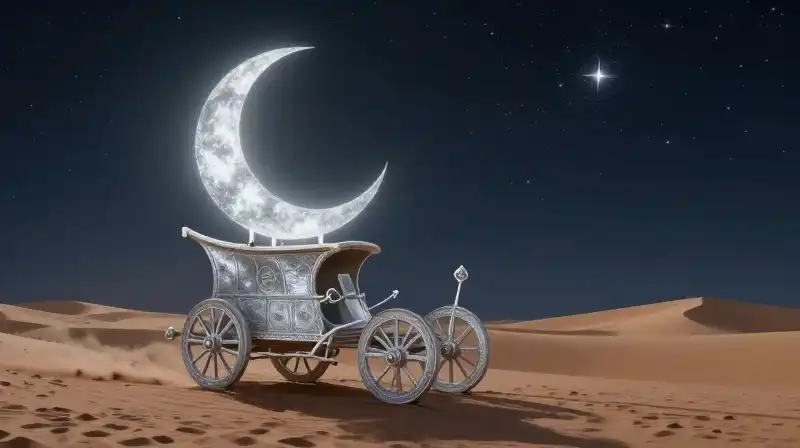
Khonsu’s reputation as a traveller is not just a poetic label; it reflects his functional role in the spiritual protection of the community. Because he governed the movement of the moon through the darkness, Khonsu was seen as the celestial “Pathfinder” and “Defender” (1, 3). His power was often invoked to safeguard individuals and caravans moving under the cover of night, linking his celestial journey to human safety. This practical application of his divine purview cemented his cultural importance among communities reliant on travel and trade across the desert.
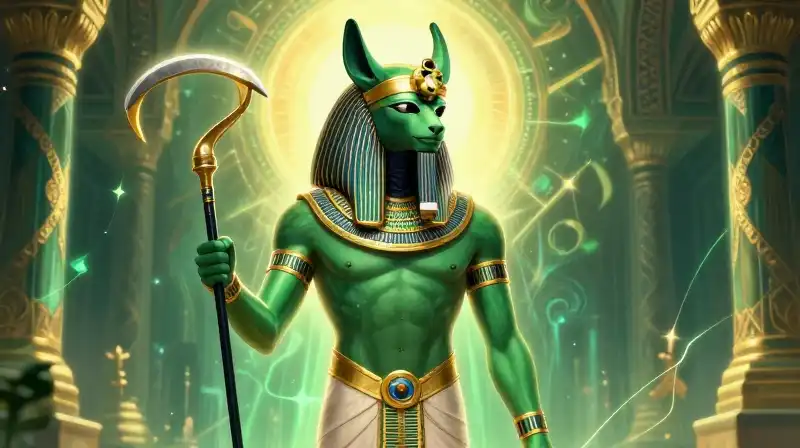
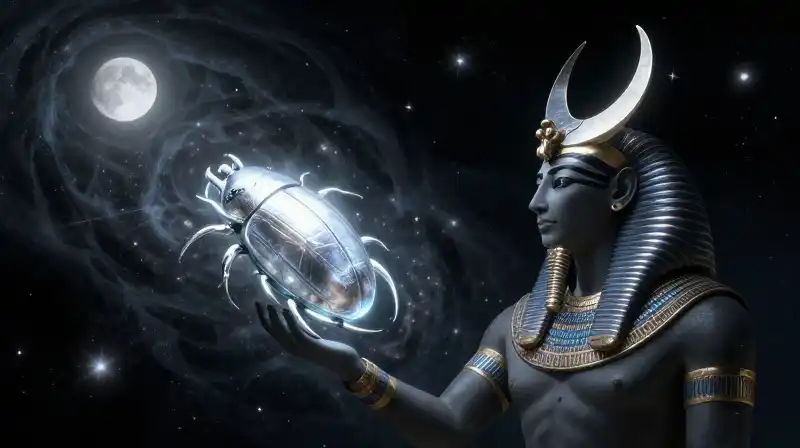
Symbolically, Khonsu’s identity was often complex, particularly when viewed as “Iah-Khonsu,” a dual form that represented the living or rising moon and was associated with other major figures like Thoth and Osiris 1. His visual iconography often reinforced this theme of cyclical movement and emergence. Early depictions frequently showed him as a falcon crowned with a moon-disk and crescent, or as a mummiform human figure possessing a distinct sidelock. Later, during his time as a creator god, he was sometimes dramatically depicted in a composite form, standing upon a crocodile (1, 2), which added layers of primal, chthonic power to his otherwise celestial nature.
The Cycles of Creation and Renewal
Beyond guardianship, Khonsu was intimately tied to the vital functions of life and creation. As a god of renewal, his influence extended deeply into agricultural and domestic life. He was revered as a fertility deity who influenced the successful conception of women and the overall breeding success of livestock (1, 2, 3). This association grounds him in the fundamental cycle of birth and growth, reflecting the constant, quiet renewal that the lunar cycles represented.
This idea of constant renewal is reflected in his physical representation. Khonsu was frequently portrayed as either a youth or a child, but this depiction was often deliberately paired with symbols or imagery of an old man. This juxtaposition is not arbitrary; it is a profound cultural statement about the perpetual cycle of the lunar month—the continuous transformation, death, and rebirth that occurs with every passing cycle (1, 2). In the realm of the afterlife, this concept of transformation becomes critical. In the Coffin Texts, Khonsu appears as a fiery force involved in the crucial process of the “destruction of heart,” signifying the deceased’s ultimate transformation and the appropriation of divine power as they entered the underworld 1.
Regional Identities and Sacred Spaces
While Khonsu was a major figure centered in Thebes, his veneration was not monolithic across the entire Egyptian kingdom. Thebes, with its magnificent temple complex at Karnak, served as a primary cult center where his followers gathered (1, 2). However, local traditions often added unique layers of meaning. In the city of Edfu, for instance, Khonsu was recognized by a specific regional epithet, “the Son of the Leg,” a title rooted in local connections to the older Osiris myth (1, 2). This variation highlights how the powerful, universal narrative of the moon god was adapted and internalized by local communities, making the tradition a living, evolving part of regional heritage.
Understanding Khonsu’s Enduring Context
When engaging with the tradition of Khonsu, it is important to understand that his identity was inherently fluid. Scholarly debate persists regarding the precise gender of the deity and the complete cultural import of his name, though “traveller” remains the prevailing interpretive consensus (3, 2). What remains constant is the human understanding of the unknown: Khonsu embodied the part of existence that is always moving, always changing, and always moving towards a predictable return.
The Khonsu tradition asks the observer to look beyond the definition of a god and to recognize him as a cultural symbol of dynamic tension. He is the moment of powerful, necessary destruction, the moment of gentle nurturing, and the continuous, rhythmic passage of time. For those who study or practice these ancient traditions, understanding Khonsu is understanding the Egyptian way of life: a way rooted in respecting the cycle—the inevitable “destruction of heart” that is simultaneously the promise of glorious rebirth.
References
Footnotes
Related Articles