Elegua: The Divine Messenger and Lord of the Crossroads

Introduction
In the rich tapestry of Afro-diasporic spiritual life, few figures are as fundamental, yet as misunderstood, as Elegua. Far from being a peripheral or “minor” deity, this figure—known by diverse names such as Ẹlẹ́gbára, Eshu, Legba, Elegba, and Exu—holds a foundational position in pantheons across traditions like Yoruba, Santería, Winti, Umbanda, and Candomblé 1. Elegua functions as the spiritual gatekeeper, the first entity acknowledged in any prayer or spiritual journey. He is the dynamic intermediary, representing the essential transition between the material world and the divine realms. To understand Elegua is not merely to memorize a list of names; it is to grasp the profound cosmological truth that life itself is a continuous negotiation between opposing forces.
The Primacy of the Messenger
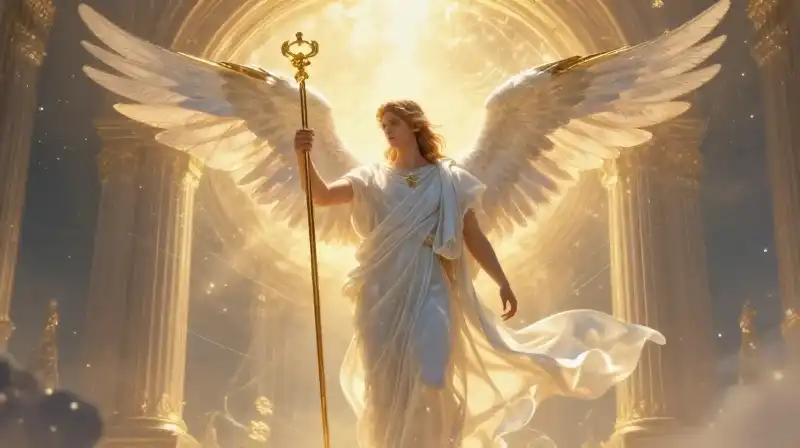
The role of Elegua is fundamentally tied to connectivity. He is the original scout, the crucial messenger who acts as the bridge between humanity and the higher Orishas (or deities). In the Yoruba cosmology, for instance, Elegua was among the first entities created, sent forth to scout the paths for other powerful Orishas like Ogun and Obatala 1. This status as the primary messenger means that all spiritual communication must pass through him first. He is the initial point of contact for devotees seeking wisdom, guidance, or divine power (2, 1). This function establishes him not as the source of all power, but as the vital conduit that allows that power to be accessed. He doesn’t simply grant wishes; he manages the flow of all spiritual energy, making him the ultimate determinant of whether a path opens or closes.
The Crossroads: A Symbol of Balance and Destiny
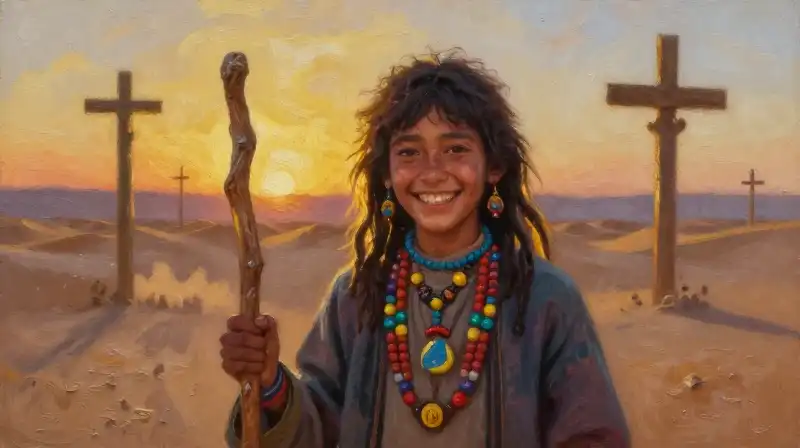
The deity’s title, “Lord of the Crossroads,” is central to his identity. Culturally, the crossroads are not simply geographical intersections; they are liminal spaces—threshold points where different possibilities meet and decisions are made. Elegua embodies the concept of duality and balance, serving as the force that mediates life’s inherent contrasts 1. This concept is physically manifested in various traditions. In Yoruba practice, small mounds or pillars called Èṣù-ọ̀nà are erected as shrines, often crafted from red laterite stone and adorned with cowrie shells. These shrines are specifically located at crossroads and market places, where annual sacrifices and prayers are offered to acknowledge his mastery over these junctions 1. As the personification of destiny and fate, Elegua holds the unique power to open or close opportunities and life paths (2, 1). He doesn’t control the outcome entirely, but he controls the *passage* to that outcome, embodying the unpredictable nature of change.
Variations Across the Diaspora
As the traditions traveled across the Atlantic during the era of the Trans-Atlantic Slave Trade, Elegua was shaped and syncretized with various local spiritual and Catholic figures, leading to the diverse names and roles he holds today 1. In the Caribbean diaspora, where the blending of cultures was intense, Elegua is widely recognized as the master of the crossroads. He was syncretized with figures such as Saint Anthony of Padua 1. In the Afro-Brazilian framework, the deity is primarily recognized as Exu 1. Furthermore, certain regional traditions, such as Santería, organize his manifestations into distinct “roads” or caminos. These roads represent different temperaments, showcasing his complexity. A devotee might invoke the playful Elegua Alagguana or the more mischievous Elegua Eshu Alawana, depending on the specific needs of their situation 1. These variations highlight that Elegua is not a monolithic entity but a dynamic spiritual presence capable of fulfilling many roles, from the playful to the stern.
Elegua as the Divine Regulator
Understanding Elegua requires looking beyond his role as a mere messenger. He operates simultaneously as a guide, a tester, and a partner in the balance of the universe. On one hand, he is the “divine policeman.” Because he controls the passage between worlds, he is tasked with testing a person’s integrity and word. He is known to ensure that an individual is honest before granting them fortune or granting them passage through his jurisdiction 1. On the other hand, he is never isolated. He is often paired with other deities to achieve a greater equilibrium. For instance, he is frequently partnered with the Orisha Echu, who represents chaos and misfortune. Though their relationship is defined by the unpredictable nature of both forces, their union creates a dynamic partnership that brings necessary balance to the cosmic flow 1. His sacred iconography often reflects this complexity, utilizing colors like red and black to symbolize his power and the various paths of existence, alongside tools like a cane, a dog, or keys, which represent his control over time 1.
Navigating the Ritual and Practice
For those seeking to understand how his tradition is lived, the focus is always on respect for the threshold he governs. Regarding practical matters like offerings or specific beliefs, it is important to recognize that within the religious frameworks, specific rituals and offerings are tailored to the particular spiritual path or *caminos* being followed. The belief surrounding offerings—such as the traditional use of pennies—relates to his role as a regulator who is attentive to those who approach him with integrity 1. Crucially, the traditional community views Elegua through a lens of functional necessity. He is not understood as a source of evil, but as the necessary force of change, unpredictability, and the ultimate arbiter of one’s preparedness for the paths of life. His power is measured by his ability to open or close the door, ensuring that transformation is always intentional.
Living Significance
Elegua’s enduring presence across the globe speaks to the universal human need to understand fate, choice, and the necessary chaos of life. He reminds the practitioner that life is not a linear path but a constant series of choices made at junctures—the crossroads. By embodying the duality between chaos and order, chance and destiny, Elegua provides a powerful spiritual framework for acknowledging that all life, both sacred and mundane, must pass through the turbulent, yet necessary, transition he oversees.
References
Footnotes
Frequently Asked Questions
Does Elegua like pennies?
The article mentions that the belief surrounding offerings to Elegua includes the traditional use of pennies, which relates to his role as a regulator who is attentive to those who approach him with integrity.
Related Articles