
Sirona: The Gaulish Goddess of Healing and Celestial Stars

Introduction
The study of Sirona invites us to explore a fascinating intersection of nature, spirituality, and the deep roots of ancient European culture. She was a powerful, syncretic deity revered primarily across East Central Gaul and along the Danubian limes during the Roman era 1. Rather than being confined to a single narrative, Sirona represents a powerful local tradition—a spiritual lens through which ancient communities viewed the raw, healing power of the natural world. Her cult was not just about worship; it was intrinsically linked to the cycles of the stars and the life-giving properties of thermal springs and wells (1, 2). To understand Sirona is to understand how diverse traditions converged, where local Gaulish beliefs blended seamlessly with Roman iconography to create a uniquely regional spirituality.
The Landscape of Sacred Practice
For the communities that revered her, Sirona’s temple was rarely an isolated structure; it was usually a sacred node within a wider, healing landscape. The sites of her devotion were most commonly established around vital natural sources—thermal springs and wells, which were considered direct manifestations of her power (1, 2). This reverence for natural locations mirrors her function as a healer; these springs provided the physical means of recovery, while Sirona provided the spiritual legitimacy for that process.
These shrines often followed the architectural blueprint of the Gallo-Roman *fanum*, typically consisting of a cella and a pronaos, placing her at the heart of a ritual center 1. Major centers of her worship, such as Trier, Aquincum, and areas within Alsace, showcase the breadth of her influence. These locations were not just religious outposts; they were regional hubs where local cultural practices met the expanding Roman world (1, 2).
Iconography of the Healer and the Celestial Body
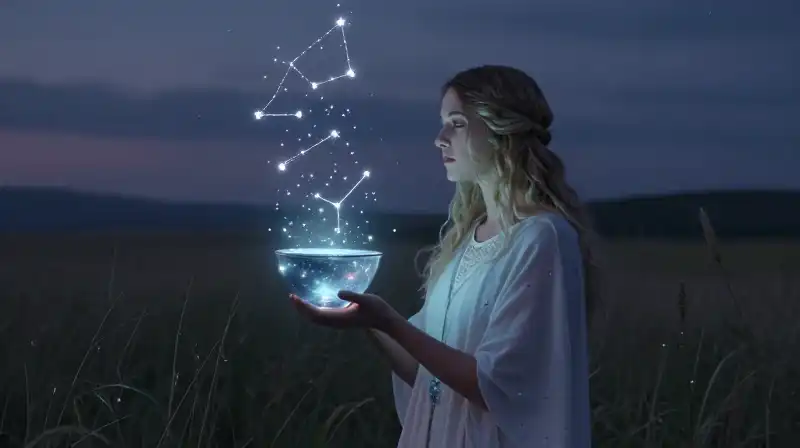
The visual representation of Sirona provides a wealth of information about the complex nature of her identity. Iconographically, she shares deep roots with the Greek healing goddess Hygeia, often depicted holding a patera (a shallow dish used for ritual pouring) alongside a long snake (1, 2). The snake itself is a symbol frequently associated with regeneration, wisdom, and healing in many cultures.
The artistic depictions vary. At sites like Hochscheid, statues frequently portrayed Sirona in flowing gowns, sometimes shown partially nude—a depiction that suggests a primal, elemental connection to nature (1, 2). Her attributes often included both the snake and a bowl containing eggs, further reinforcing her connection to life and fertility. These visual markers collectively define her as a patron of both physical and spiritual well-being.
The Language of the Stars and Linguistic Roots
One of the most intriguing aspects of Sirona is the potential connection between her name and the celestial bodies. Scholarly theories suggest her name originates from a Gaulish root, specifically *ster- (or *sirom*), which could translate to ‘star’ or ‘stellar’ (1, 2). This astronomical link adds a layer of cosmic significance to her divine role, suggesting she may have been a guardian of both earthly healing and celestial navigation. Furthermore, linguistic variations such as Đirona and Thirona reveal the phonetic challenges inherent in translating the specific sounds of Celtic languages into the Latin script (1, 2).
While the celestial link remains strong, some interpretations explore alternative origins. One theory posits that her name could derive from the Gaelic word tSaoir, meaning ‘craftsman’ or ‘smith’ 1. This diversity of origins suggests that Sirona was a highly flexible and adaptive deity, whose identity was shaped as much by linguistic evolution and regional folklore as by her role as a healer.
Syncretism: Navigating a Changing Pantheon
Sirona’s presence in the religious landscape of the Danubian limes is a testament to the process of syncretism. This was a cultural practice where local traditions assimilated aspects of powerful, incoming traditions. Sirona was not merely a local deity; she participated in a broader, evolving spiritual system. She was frequently dedicated alongside male deities, most notably Apollo (1, 2). In these dedications, assimilation occurred, as local variations of Apollo (like Apollo Borvo or Apollo Grannus) were also locally associated with healing (1, 2).
In certain contexts, Sirona was also merged with major Roman figures. She was sometimes identified with Aesculapius, the Roman iteration of the Greek healing god Asklepios, or even Diana 1. This ability to be viewed as both a local protector and a Roman archetype allowed her tradition to persist and thrive amid the shifting political and cultural tides of the Roman Empire. Within the broader Atlantic regions, she was also viewed as part of the conceptual framework of the Celtic ‘Great Goddess’ 1.
Understanding the Tradition’s Scope
When considering the symbolism and practice of Sirona, it is useful to look at the breadth of her influence. Her “powers” were inherently related to renewal, life, and health, which makes her one of the most relevant traditions when discussing ancient spiritual connections to nature. The symbols she carried—the snake (symbol of rebirth), the patera (ritual offering), and the connection to spring water—are all linked to her role as a vital source of recovery (1, 2). While the tradition provides a framework for understanding ancient rituals, it is important to note that her specific ‘prayers’ or rituals would have been tied entirely to the local linguistic and environmental context of the community (1, 2). Her regional presence remains highly concentrated in specific areas of East Central Gaul, illustrating how powerful local beliefs can maintain unique identities even while interacting with empires 1.
The Enduring Meaning of Sirona
Sirona’s story is ultimately a tale of cultural persistence and adaptation. She represents the enduring human need to find meaning and healing within the natural world, a need that didn’t vanish with the rise of organized imperial religion. Her blending of the stellar, the terrestrial (the springs), and the mythological (the snake and the eggs) demonstrates a sophisticated ancient worldview. The Sirona tradition reminds us that even the most regional or “local” gods hold deep, universal truths about life, the cycle of renewal, and the sacred power embedded in the environment we inhabit.
References
Footnotes
Related Articles