The Story of Samhain: How the Otherworld Shaped Halloween

Introduction
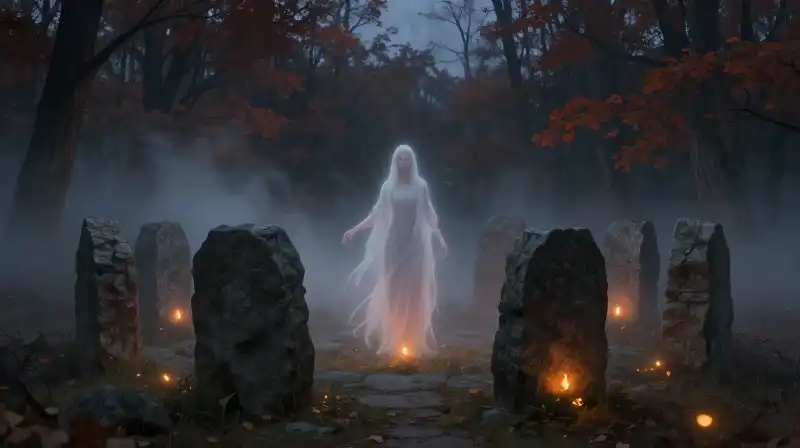
Samhain, pronounced *Samain*, marks more than just the end of the autumn harvest in Gaelic traditions; it signals a profound seasonal and spiritual shift, marking the transition from the lighter, growing half of the year into the “darker half” of the year 1. Among the four principal Gaelic festivals—alongside Imbolc, Bealtaine, and Lughnasa—Samhain was regarded as the most significant, holding a place where the boundaries of the known world blurred. This period was understood as a time of great liminality, where the distinction between the earthly realm and the *Otherworld* became thin enough to allow contact with the *aos sí*, or spirits and ancestors 1. It is through this framework—a deep reverence for ancestors and an acute awareness of the unseen—that Samhain shaped the traditions we now recognize as Halloween, though the story is rooted far more deeply in the soil of ancient Gaelic culture.
Crossing the Threshold: The Spiritual Meaning of Samain
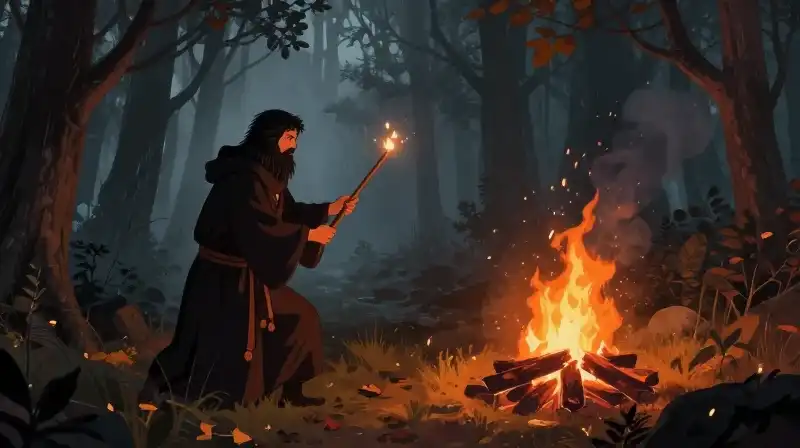
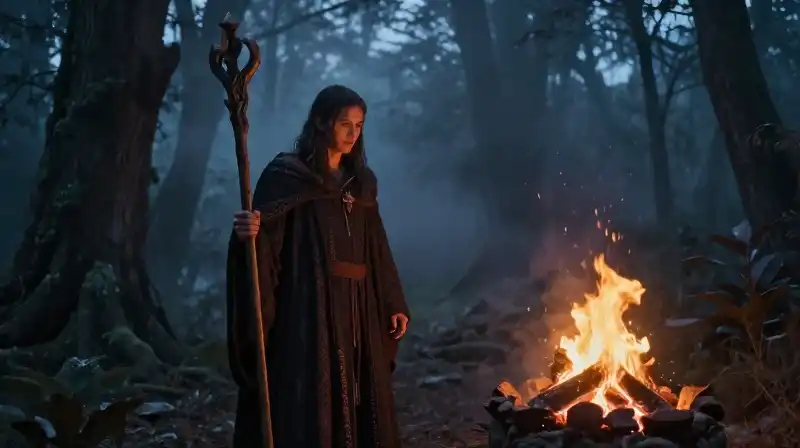
At the heart of ancient Samhain was the concept of the veil thinning. This spiritual threshold meant that the forces of the underworld were believed to gain temporary ascendancy (1, 2). Ancestral spirits were expected to return to their homes, making the night a time for solemn recognition and provision. Ritualistic practices involved preparing food not only for the living community but also for the dead who were believed to be visiting 1. These ancestors were not merely memories; they were active presences whose acknowledgment was crucial to the health and prosperity of the community. Furthermore, Samhain incorporated deep cosmological elements. Astronomically, evidence suggests that Neolithic passage tombs across Britain and Ireland were aligned to witness the sunrise around this time, suggesting that these ancient burial mounds were viewed as portals to the Otherworld (2, 1). The heightened vulnerability of this transitional night led to customs of concealment. Because harmful spirits were thought to become more active, many wore masks and disguises, either to ward off malevolent entities or to imitate the spirits themselves (1, 2). Another central cultural fear revolved around the potential for chaos during this night. To counter the perceived power of the underworld, “Winter Fires” were lit, serving as protective and purifying ceremonies 1.
Regional Sites and Mythological Depth
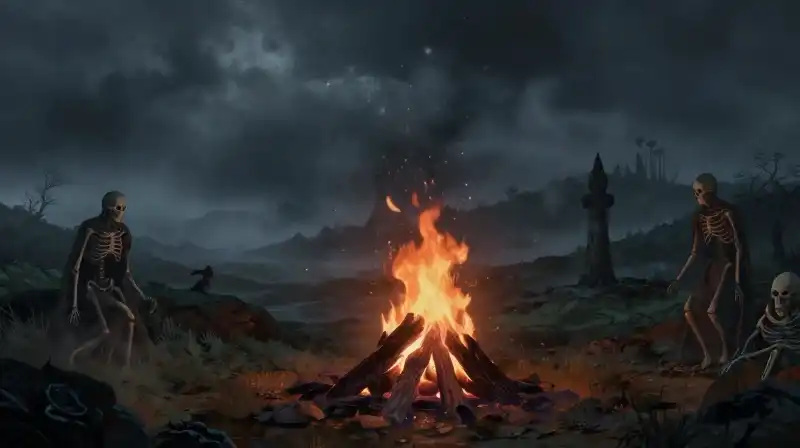
The spiritual weight of Samhain was tied to specific, sacred geography. In Ireland, the location of Tlachtga in the Boyne Valley was centrally associated with the festival; local records recount the Great Fire Festival at Tlachtga as a powerful observance marking the eve of Samhain 1. Celtic mythology further enriches this narrative. Figures like Donn, known as the Lord of the Dead, were strongly associated with the Skellig Islands and his ancestral dwelling, Tech Donn. This structure was considered a literal entryway into the Otherworld, cementing the tradition’s focus on the unseen 1. Linguistically, the name Samhain has been the subject of debate. Some early scholarship looked toward proto-Indo-European roots like *semo* (“summer”), but others propose a derivation from the proto-Celtic word *samoni* (“reunion”) 1. While some early theories suggested Samhain acted as a “Celtic New Year,” current scholarship regards this interpretation as highly contested 1. The rituals were complex, including the practice of offering livestock to communal fires and even the burning of animal bones, acts which served both to cleanse the land and to honor the veneration of the dead (1, 2).
From Sacred Roots to Modern Halloween
The trajectory of Samhain shifted over time, most notably through the influence of Christianization. During this historical period, the veneration of the dead was absorbed into the Christian calendar, leading to the establishment of All Saints’ Day (November 1st) and All Souls’ Day (November 2nd), which historians believe influenced modern observances (1, 2). The modern American tradition of Halloween, however, is a relatively recent development, carried by waves of Irish and Scottish immigrants in the 19th century. They brought their original Samhain customs—which involved honoring the dead and recognizing the transitional nature of the season—and blended them with new cultural elements, such as the practice of carving pumpkins (1, 2). This migration demonstrates how cultural practices evolve as they move through diasporas, adapting old beliefs to new environments.
Navigating Misconceptions: Samhain in Context
One common confusion surrounds the connection between ancient Samhain and organized religion. It is important to clarify that the traditional, ancient understanding of Samhain is pre-Christian. When asking “What does the Bible say about Samhain?”, the answer is that Samhain did not exist within the scope of the Bible, as it is a tradition born out of ancient pagan practices before the rise of mainstream Western Christian structures. Its connection to the calendar was established later through syncretism—the blending of ancient traditions with new ones—rather than direct scriptural mandate. Similarly, the “story of Samhain Halloween” is not a single narrative but rather a complex tapestry of seasonal transitions, ancestral reverence, and cultural migration.
The Living Legacy of Samain Today
Ultimately, Samhain represents a powerful cultural practice that encourages people to pause, reflect, and acknowledge the cyclical nature of life and death. While the elaborate rituals involving the *aos sí* and the burning of livestock are ancient and regionally specific, the core theme—the honoring of those who came before us and recognizing the presence of the unseen—remains a universal human concern. The tradition persists as a reminder that even in the darkest part of the year, the bond between the living and the departed is felt, offering a lens through which communities globally examine their own heritage and the cyclical truths of the seasons.
References
Footnotes
Frequently Asked Questions
What does the Bible say about Samhain?
The Bible does not contain any mention of Samhain, as it is a tradition that originated from ancient pagan practices predating the rise of mainstream Western Christian structures. Its connection to the calendar was established later through syncretism rather than direct scriptural mandate.
What is the story of Samhain Halloween?
Samhain was an ancient Gaelic festival marking a profound seasonal and spiritual shift where the distinction between the earthly realm and the Otherworld thinned, allowing contact with ancestors. This tradition, which involved honoring the dead and recognizing the unseen, formed the foundation for modern Halloween through cultural migration.
Related Articles