The Roots of Halloween: How Samhain and Christianity Merged

Introduction
For many, Halloween is a celebration of costumes, candy, and community fun. Yet, to understand the holiday at its core is to recognize it as a profound cultural meeting point. Halloween is not a single invention but a tapestry woven from layers of history—an intricate blend of ancient spiritual practices and the powerful influence of Christian theology. Its story is one of transformation, blending the cyclical, nature-based observances of the Celtic peoples with the institutional framework of the Church, creating a unique holiday dedicated to honoring ancestors and navigating the boundary between the living and the departed.
The Foundation: Navigating the Veil of Samhain
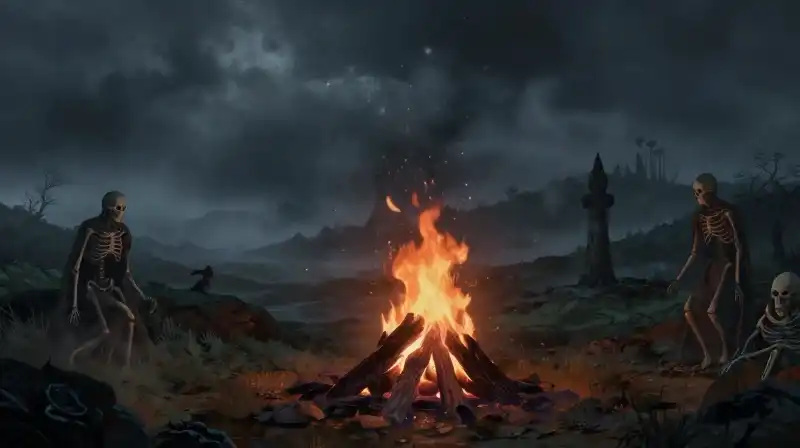
The deepest roots of Halloween reside in the ancient Celtic festival of Samhain. Samhain marked the transition from the harvest cycle to the harsh darkness of winter. Unlike modern holidays that focus solely on a single event, Samhain was a time of profound cultural change, signifying the closing of one year and the preparation for the next. This period was when the boundaries between the mundane world and the spirit world were believed to thin, allowing the deceased and various spirits to walk the Earth 1.
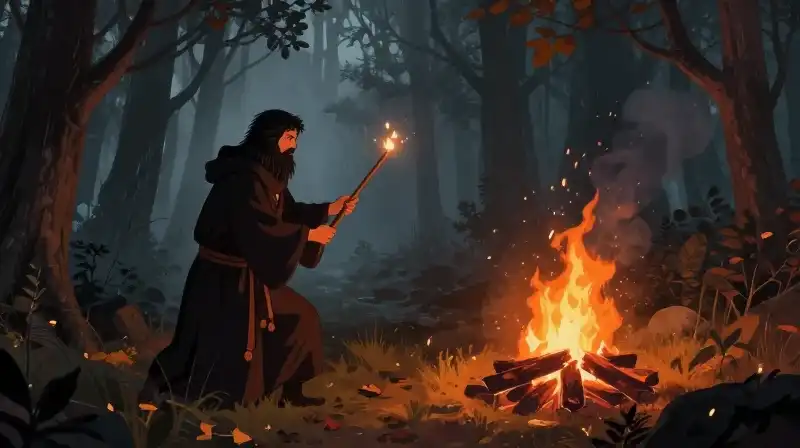
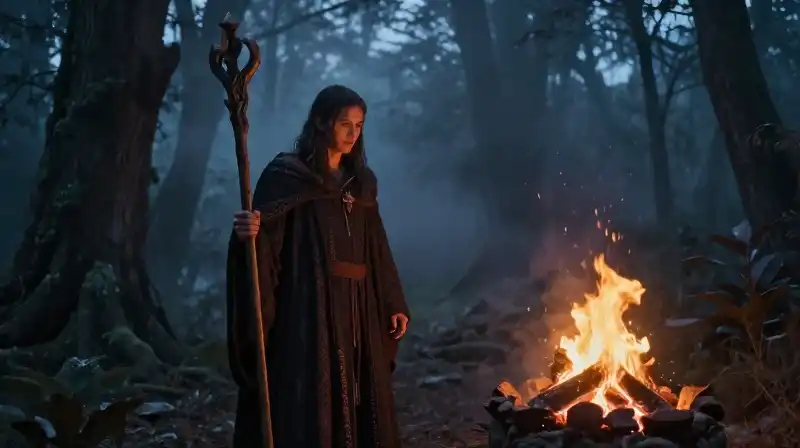
The Celtic response to these perceived shifts involved both celebration and caution. People observed the festival by lighting bonfires, representing the death of the summer and the birth of the winter season. Furthermore, they donned disguises, a tradition that served dual purposes: it allowed individuals to evade vengeful or lost ghosts, and in some contexts, it allowed them to approach spirits and deities as if they were among their own group (1, 2). The colors often associated with the holiday—black and orange—are themselves tied to this ancient practice, representing the darkening of the year and the abundance of the harvest 1.
The Christian Adaptation and Liturgical Shift
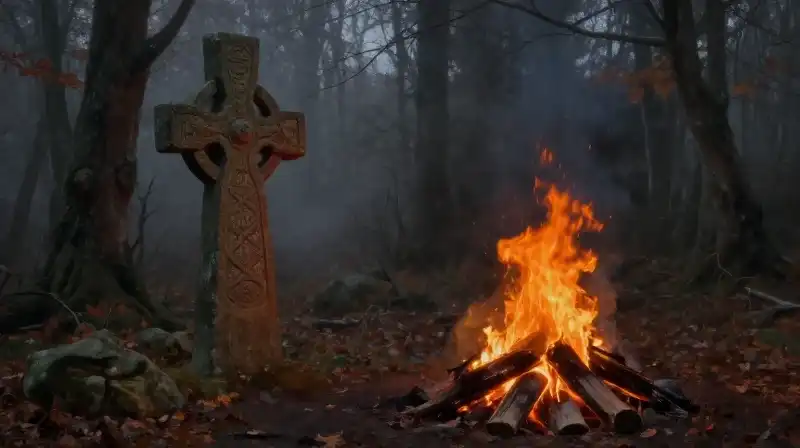
As Christianity became the dominant faith in Europe, the Church did not erase Samhain; it absorbed it. The tradition of honoring the deceased and the holy was already present in the region. To integrate these beliefs, the Church formalized several holidays centered around the end of autumn. The central observance of All Saints’ Day, which honored those who had passed into the light of faith, was ultimately fixed on November 1st 1. The preceding night became known as All Hallows’ Eve, which was colloquially shortened to All Hallows’ Night, later evolving into Halloween.
This Christian overlay introduced specific rituals related to the soul. The practice of “souling,” prominent in parts of England and Flanders, involved children visiting homes on Allhallowtide. They would collect “soul cakes” and prayers from households in exchange for offering spiritual favors to the recipients. This practice linked the old reverence for the wandering spirits of Samhain to a new, structured devotion to the saints and God 1.
From Alms-Giving to Modern Play: The Evolution of Tradition
The modern iteration of Halloween, with its focus on “trick-or-treating,” represents a further evolution of these complex, solemn traditions. Early door-to-door gift exchanges were rarely centered on sugary candy; instead, they involved offering practical things like fruit, nuts, and coins, mirroring an ancestral practice of alms-giving to the poor or the dead 1. Furthermore, the tradition sometimes traveled through different cultures. One theory suggests the modern “tricks” aspect evolved from the German-American tradition of “belsnickeling,” where disguised children would seek treats after being unable to be easily identified by adults 1.
Regional variations added distinct flavors to the holiday. The game of bobbing for apples, for instance, has its origins in a Roman festival honoring Pomona, the goddess of agriculture. This Roman ritual blended with later Samhain practices, serving as a predictive game regarding relationships 1. Even the mischief and pranks celebrated today have roots in various regional traditions, including those carried forward by Irish and Scottish immigrants in America, who were adapting and reinventing their ancestral customs (1, 2).
Folklore and Cultural Specificity: Symbols of the Harvest
The visual iconography of the holiday is rich with cultural meaning. The legend of the Jack-o’-Lantern, specifically, is rooted in an Irish tale. The story of Stingy Jack—a man who was condemned to wander the earth as a ghost and was eventually given a glowing piece of coal—is the origin of the carved pumpkin 1. This gave the humble turnip or pumpkin a supernatural light, symbolizing the presence of the spirit world. The focus on the harvest, represented by pumpkins and gourds, continues to ground the celebration in the essential reality of the changing seasons.
Clarifying the Roots: Samhain vs. Christianity and Geographic Origins
Often, the relationship between Samhain and Christianity is viewed as a conflict, but culturally, it is one of powerful synergy. As detailed in the historical record, the widespread practice of Halloween is a product of this blending: the sacred devotion to saints became mapped onto the ancient times when the veil between worlds was thinnest. This fusion resulted in a holiday that simultaneously acknowledges the fear of the unknown (the spirits) and the comfort of faith (the saints). Regarding its origins, the primary historical and cultural foundation of these traditions is rooted in the Celtic practices of Ireland and the surrounding regions, later dramatically amplified and transformed through American immigrant experience (1, 2).
Therefore, the search for the ultimate “Halloween roots” is a search for the intersection of nature’s cycle and human spiritual need—a time when the community pauses to recognize the cycle of death, transition, and rebirth.
References
Footnotes
Frequently Asked Questions
How is Samhain related to Christianity?
The Church absorbed Samhain rather than erasing it, formalizing holidays like All Saints Day and All Hallows Eve to integrate existing traditions. This fusion mapped the devotion to the saints onto the ancient times when the veil between the living and the departed was thinnest.
Did Halloween originate in Ireland or Mexico?
The primary historical and cultural foundation of Halloween traditions is rooted in the Celtic practices of Ireland and the surrounding regions. For instance, the legend of the Jack-o-Lantern is specifically rooted in an Irish tale.
Related Articles