Día de Muertos: Understanding the Holiday, Tradition, and History

Introduction
The Day of the Dead, or *Día de Muertos*, is not merely a date on the calendar, but a vibrant, multi-day cultural event that fundamentally redefines the relationship between those who have departed and those who remain. Observed primarily in Mexico and by communities of Mexican descent across the world, the tradition transcends conventional mourning. It operates as a rare, profound celebration of continuity, where the boundary between life and death dissolves into a shared, communal experience. For the participants, this is a time when the veil is thin, allowing spirits to return to the world they once knew. Rather than focusing on sorrow, the core of *Día de Muertos* lies in welcoming the deceased back, encouraging their souls to visit and remain present with their families for a brief, joyous reunion.
The Anatomy of Memory: Constructing the Ofrenda
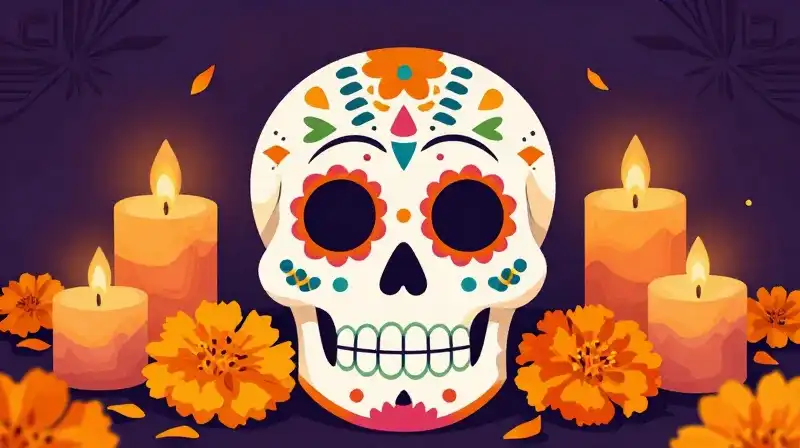
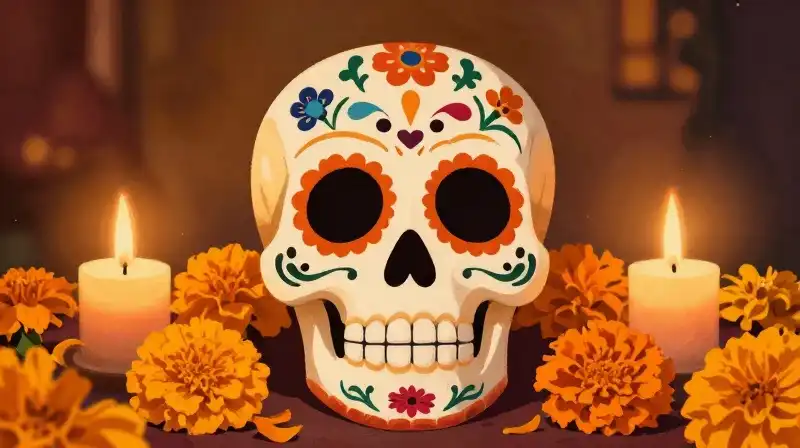
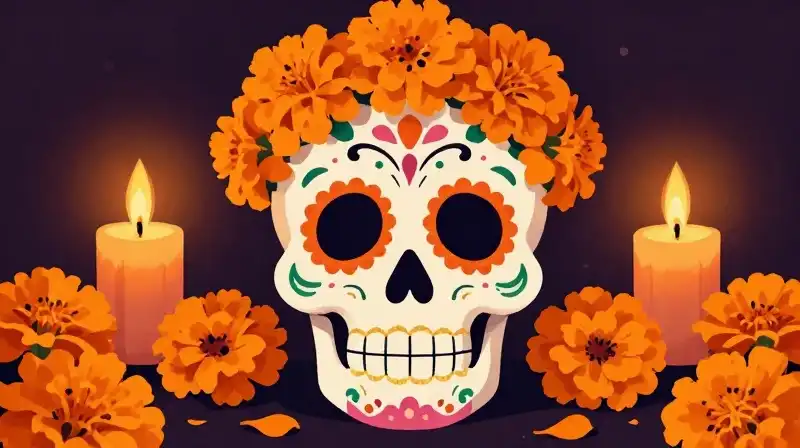
At the heart of the celebration is the *ofrenda*, or family altar. This intricate arrangement is far more than a decoration; it is a meticulously designed ceremonial portal and a culinary invitation. Participants do not simply display photographs of the departed; they curate a precise environment intended to ground the spirits and entice them to visit from the *Mictlán*, the traditional land of the dead 1. The elements of the *ofrenda* are highly symbolic and functional. The construction typically includes bright marigold flowers, *cempazúchil*, whose vivid color and potent scent are believed to serve as a guiding light for the arriving souls. Along with personal photographs and candles, the altar is laden with the deceased’s favorite foods and beverages. This “communal feast” is essential, as the offerings are understood by participants to nourish the spirits and facilitate their journey back to the living family unit 1. By providing the familiar comforts of life—the specific flavor of a favorite meal or the warmth of a preferred drink—the families ensure that the returned souls feel welcomed and nourished.
More Than Mourning: A Spectrum of Festive Tradition
While the gathering around the *ofrenda* is often solemn in its reverence, the holiday itself possesses a distinctly light-hearted, celebratory energy. The ethos of *Día de Muertos* is that death is not an endpoint but a natural cycle, and that life continues through the memory and influence of those who passed. This is reflected in the other rich cultural practices that animate the holiday. Participants engage in traditions that invite laughter and remembrance. The sharing of *pan de muerto*, a sweet, anise-flavored bread, is a universal tradition. Perhaps the most witty element of the celebration is the *calaveras literarias*, or literary skulls—light-hearted, rhyming verses and mock epitaphs written about the deceased or even contemporary figures. Similarly, the enjoyment of sugar skulls, or *calaveras de azúcar*, serves as a playful recognition of mortality, accepting death as a sweet, inevitable part of the human experience 1. These practices collectively demonstrate the cultural perspective that grief can coexist with a celebratory acknowledgment of life’s passage.
Echoes of the Past: Origins and Cultural Evolution
The historical roots of *Día de Muertos* are subject to significant academic debate, complicating its narrative into a blend of deep history and modern cultural development. A prevailing narrative suggests that the tradition is a syncretic blend, drawing heavily from pre-Hispanic Mesoamerican beliefs that honored death, which then merged with Catholic observances such as All Saints’ Day (1, 2). This melding has allowed the tradition to flourish in its current recognizable form. However, historical scholarship offers a more nuanced view. Some historians suggest that while the altar-building traditions have deep roots, the highly recognizable modern elements, such as the *calaveras*, bear closer resemblance to European concepts like the *Danse macabre* and their allegories of mortality than to exclusively pre-Hispanic culture 1. Furthermore, some researchers propose that the holiday’s current prominent global status was shaped by the 20th-century Mexican governmental movement, particularly the leftist government of Lázaro Cárdenas. This viewpoint suggests the festivity may have been redeveloped to promote a unified Mexican identity and move it away from solely institutional Catholic control 1. The concept of “velar”—the practice of staying up all night with the spirits—is tied to the 19th-century Reform Laws under Benito Juárez, when the relocation of family pantheons from religious churches to civil cemeteries redefined the physical space where ancestral memory resides 1. Even iconic art such as La Calavera Catrina has been historically linked by some scholars to the lithographer José Guadalupe Posada, whose inspiration drew from European imagery rather than exclusively native tradition 1.
Understanding the Nuances of the Celebration
Given the richness of the tradition, it is helpful to clarify how the holiday is perceived and practiced.
To answer the question of how the holiday is classified: While commonly known as “Día de los Muertos,” it is celebrated across several days, usually centering on November 1st and 2nd, though some communities include other days, such as October 31st, in the festivities.
The “Day of the Dead” is considered a significant cultural observance that functions differently than a traditional religious holiday or a purely secular public holiday. It is a deeply personal and communal time dedicated to cultural memory and reconciliation with life and death.
The tradition is observed by millions, encompassing various regional interpretations. Whether one is discussing Dia de los muertos holiday traditions or seeking information on who celebrates this event, the practice remains rooted in a profound cultural identity and a historical dialogue between indigenous and colonial influences.
The Persistence of Memory
In contemporary culture, *Día de Muertos* has gained significant global visibility, culminating in its inclusion in the Representative List of the Intangible Cultural Heritage of Humanity by UNESCO in 2008 1. This recognition has sparked interest worldwide in its unique blend of reverence, artistry, and vibrant life. However, for those engaging with the tradition, it is crucial to approach the celebrations with cultural humility. Understanding *Día de Muertos* requires moving beyond a simplistic definition of “celebrating death.” It is an active, sensory, and meaningful exercise in remembrance—a way of ensuring that the voices of the departed remain an integral, celebrated part of the family and community narrative. It serves as a testament to the enduring human need to connect the past with the present, making the boundary between worlds not a source of fear, but a catalyst for communion and continued love.
References
Footnotes
Frequently Asked Questions
Is Día de los Muertos considered a holiday?
The Day of the Dead is classified as a significant cultural observance that functions differently than a traditional religious holiday or a purely secular public holiday. It is described as a deeply personal and communal time dedicated to cultural memory and reconciliation with life and death.
Which holiday is the Day of the Dead considered?
The Day of the Dead is considered a significant cultural observance that functions differently than a traditional religious or purely secular public holiday. It is a deeply personal and communal time dedicated to cultural memory and reconciliation with life and death.
Related Articles