Celtic Creatures: Uncovering the Lore of Banshees, Kelpies, and Monsters

Introduction
For communities rooted in the rich tapestry of Irish and Celtic heritage, mythology is not a collection of distant fairy tales; it is a living encyclopedia of the landscape, a repository of ancestral memory, and a guide to the delicate balance between the human world and the supernatural. The traditions surrounding Celtic mythology, passed down through powerful oral storytelling, capture the fears, hopes, and spiritual beliefs of ancient peoples. Celtic creatures are far more than just monsters; they are personifications of nature, morality, and the inevitable forces of fate.
From the mournful cries of a soul overseer to the malicious water spirit lurking in a loch, these figures serve to contextualize how the land, its ancient burial mounds, and its hidden dangers interacted with the lives of people like the Tuatha Dé Danann and the early settlers. Understanding these myths requires looking beyond simple definitions; it requires acknowledging the cultural belief system they uphold—a world where the veil between the mundane and the marvelous is often thin and easily crossed.
The Geography of the Spirit: Sidhe, Mounds, and Water Spirits
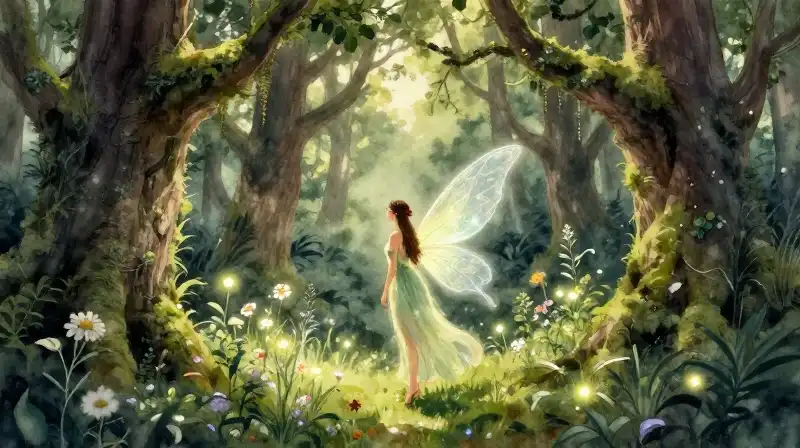
A foundational element of Celtic lore is the spiritual relationship between the living world and the land itself. The Daoine Sidhe (or Daoine Maithe/Daoine Sidhe) represent the Irish fairies, spirits who occupy a place of great spiritual significance. These beings are not uniformly good or evil; their nature is dictated by human conduct. As 1 notes, their actions can range from profoundly altruistic to intensely cruel based entirely on whether they are treated with respect and kindness. This suggests a cultural belief system where human ethics directly influence the spiritual environment.
The connection between these spirits and the physical world is cemented by the Sidhe—the mystical mounds found across the Irish landscape. According to 1, these mounds were not merely geographical features; they were ancient burial sites believed to serve as passages linking the mortal world to the subterranean realm. This spatial relationship—spirits inhabiting mounds that hold the dead—illustrates a worldview where the past is not gone, but merely hidden beneath the earth.
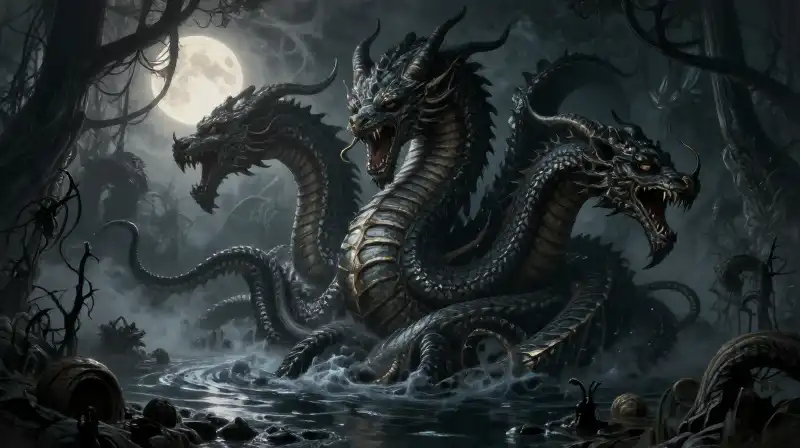
Within this landscape, the Kelpie embodies the danger of the natural world. This malicious water spirit resides in lochs and rivers, capable of assuming the form of a pony or a woman. Its primary function in the folklore is to lure travelers to their doom or, in some tales 1, even intentionally incite floods. The Kelpie, therefore, functions as a cautionary tale about the unpredictable power of nature.
Guardians, Harbingars, and the Face of Death
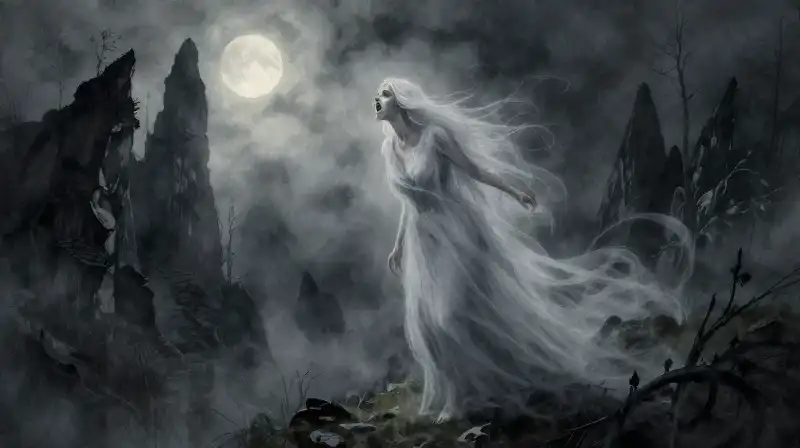
Central to many ancient cultures, the idea of a messenger of fate is deeply ingrained in Celtic lore. The Banshee, for example, is perhaps the most recognizable figure to outsiders, but for the families of the tradition, she is a deeply intimate presence. 1 and 2 confirm that the Banshee operates as a family guardian and soul overseer. Her terrifying, specific screams are not random; they serve as a precise omen of death, often tied to specific Irish family lines, such as the O’Neills and O’Connors. This provides a level of cultural specificity that moves the myth from generalized fantasy to a personal, generational heritage.
However, death’s messenger takes many forms. The Dullahan, or headless horseman, is another potent harbinger of doom. He is depicted as a figure who carries his own head and uses a whip made of human spine to warn those destined for death 1. His appearance is designed not to terrify for its own sake, but to convey the inescapable nature of mortality.
The theme of violent, unnatural death is also explored in figures like Abhartach. Described as a dreadful magician and a vampire-like dwarf, this character in Irish lore ruled a town before being slain. His subsequent reanimation from the grave, driven by vicious intent, resonates with the medieval vampire myth while remaining uniquely tied to the specific tragedy of local folklore (1, 2).
The Spectrum of Mischief: From the Far Darrig to the Púca
Not all figures in Celtic mythology are terrifying agents of fate; many serve as complex tricksters that reflect the duality of nature and life. The concept of “good” or “bad” is often secondary to the concept of “disruptive” or “transformative.”
The Púca is a quintessential example of this moral ambiguity. Characterized as a shapeshifting creature, the Púca can bring both good fortune and bad 1, capable of confusing anyone who encounters it. This mirrors the unpredictable nature of life itself. In a similar vein, the Far Darrig, or “Red Man,” operates within the mischievous faerie sphere. He is notorious for playing practical jokes, being linked to nightmares, and even swapping real children with changelings 1, highlighting the anxieties surrounding childhood and belonging.
On a more primal and aggressive level, the Bánánach represent eerie spectres mentioned in epic literature like the Táin Bó Cúailnge, associated with violence and death, sometimes possessing a goat-like appearance 1. These entities often serve as reminders of the ancient, brutal conflicts that shaped the cultural narrative of the land.
Navigating the Traditions: Celtic vs. Norse, and Who is the Boogeyman?
Users often inquire whether these **Celtic creatures** belong to a specific lineage, such as the Norse. While both cultures have rich supernatural traditions, the figures presented here belong firmly within the Celtic domain. The distinct characteristics of the Fomorians—supernatural giants from the sea or underworld who were among the earliest races to settle in the land alongside the Tuatha Dé Danann—and the intricate world of the *Daoine Sidhe*, define the unique character of Irish mythology 1. They are distinct from their Norse counterparts.
Regarding the concept of the “boogeyman,” the answer lies in the cultural function of fear versus disruption. If seeking a definitive “scary” figure, the Dullahan or the Kelpie serves that purpose. However, if one is looking for a culturally representative figure of chaos and unsettling unpredictability—a mischief that both frightens and poses a mystery—the Púca or the Far Darrig fits the role of the traditional mythological trickster.
The Living Significance of the Lore
The depth of this mythology is evident when considering creatures like the Merrow and mermen—serpentine figures that beautifully transcend the boundaries between land and sea. Their descriptions vary from gentle, green-haired maidens to grotesque forms 1, demonstrating that the myth allows for a spectrum of beauty and danger. Whether they are benevolent guides or dangerous creatures, they hold a profound place in a culture deeply connected to its water and its hidden resources.
Today, these tales remain vital to understanding cultural heritage. They provide a narrative lens through which a community processes their relationship with the wild, with mortality, and with the boundaries between the sacred and the mundane. By preserving the stories of the Kelpie, the Banshee, and the Púca, people preserve the memory of the oral tradition—a living, breathing connection to the spiritual landscape that defined their ancestors. The wisdom held within these tales serves as a cultural compass, reminding us that even the wildest, most terrifying parts of the world are inextricably linked to the human experience.
References
Footnotes
Frequently Asked Questions
What is the Irish boogeyman?
The Dullahan or the Kelpie serves as the definitive scary figure, but the Púca or the Far Darrig fits the role of the traditional mythological trickster who represents chaos and unsettling unpredictability.
Are Irish Celtic or Norse?
The figures and mythology presented in the article belong firmly within the Celtic domain and are distinct from their Norse counterparts.
Related Articles