Russian Fairy Tales: History, Folklore, and Their Cultural Impact

Introduction
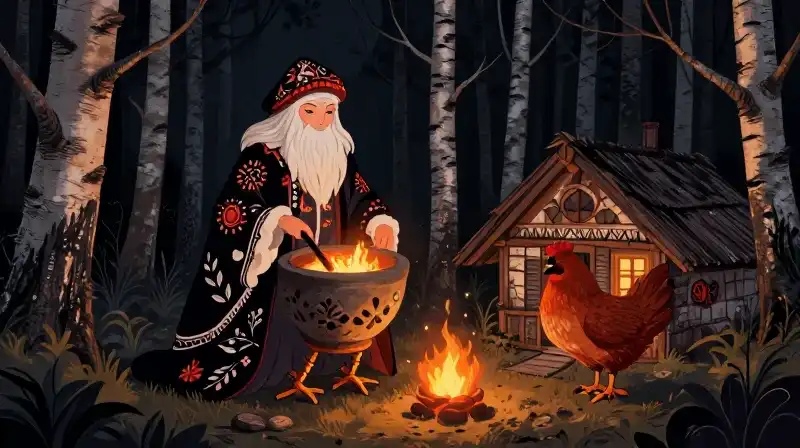
For a community, the collection of tales, gods, and myths serves as far more than mere entertainment; it is a narrative anchor. Russian fairy tales, deeply rooted in Slavic mythology, provide a vibrant tapestry of history and regional worldview. These poetic narratives, featuring heroes battling demons, cunning witches, and powerful gods, functioned traditionally not just as stories, but as essential tools for communal learning. They taught foundational lessons about manners and customs while simultaneously issuing vital warnings regarding the natural world and the threats facing rural life 1.
The Resilience of Old Myths
The cultural longevity of the Russian fairy tale is tied to the remarkable resilience of its underlying mythology. Even after the regional adoption of Christianity in the 10th century, the Slavic gods and figures persisted within the collective memory. This endurance illustrates a sustained cultural identity that refused to be entirely subsumed by external influences 1. The stories became vessels through which the community could understand their place in the universe, allowing old traditions to survive by adopting new forms.
The Great Preservation: Alexander Afanasyev
The tradition was brought to a standardized, published format largely due to the monumental work of Alexander Afanasyev. Between 1855 and 1863, Afanasyev collected and compiled nearly 600 folk tales and fairy tales, focusing heavily on those originating from Ukraine and Belarus, alongside Russian stories (1, 2). His editorial effort was profoundly influential, acting as a crucial bridge between oral tradition and modern literary canon.
Afanasyev’s approach was not isolated. His scholarship sat within a broad academic context of 19th-century European folklore. His work was influenced by the collections of contemporary international folklorists, including the German Grimm and the work of figures like Pavol Dobšinský and Vuk Karadžić 1. By systematizing these stories, Afanasyev enabled later scholars, such as Vladimir Propp, to develop his influential theory in the Morphology of the Folktale 1, establishing the academic structure that defines the genre today.
Folklore Under Political Turmoil
The journey of Russian folklore has not been without significant upheaval. During the Soviet era, this cultural heritage nearly faced extinction. However, its preservation was secured through a complex and often contradictory history of advocacy. Figures like Maxim Gorky championed the artistic value of the genre, which led to a “Golden Age” of preservation and expansion in the 1920s 1.
It is essential to understand that this era of preservation had a dual nature. While collectors and artists were documenting and elevating the beauty of traditional folklore, the Soviet state often utilized this material as a political vehicle. Contemporary writers adapted tales to promote communist ideals and glorify political figures, including Stalin and Lenin. This demonstrates how folklore, while deeply rooted in the past, is always interacting with the political identity of the community in which it exists 1.
The Living Tradition Today
While the historical context of these stories has shifted radically, the tradition remains a vital part of modern Russian cultural life. Today, the spirit of the fairy tales persists through various contemporary forms. The narrative structures and archetypes remain influential in modern Russian art, ensuring that the heroes and demons of old continue to resonate in current culture 1. This enduring legacy is maintained through modern cultural celebrations and the ongoing reinterpretation of classic mythological themes.
The continued gathering and sharing of these stories by scholars, like the British collection efforts by Robert Steele in “The Russian Garland,” demonstrate a constant global fascination with this tradition, proving that its power to reflect human experience transcends its original linguistic and regional boundaries 1.
The Significance of the Narrative
Ultimately, Russian fairy tales offer a powerful window into the cultural values and regional concerns of the Slavic peoples. By exploring narratives that bridge the sacred and the mundane—the mystical gods alongside everyday rural life—these stories convey how people perceive their place in a challenging and often powerful environment. Understanding these tales is not simply cataloging old stories; it is understanding a community’s enduring way of making sense of the world, whether that world is filled with wild magic or political ideology.
References
Footnotes
Frequently Asked Questions
What are Russian folktales?
Russian fairy tales are poetic narratives rooted in Slavic mythology, featuring heroes battling demons, cunning witches, and powerful gods. Traditionally, they functioned as essential tools for communal learning, conveying foundational lessons about manners, customs, and the regional worldview.
Related Articles