Celtic Creatures and Fae: Exploring Irish Folklore and Legends

Introduction
The landscape of Irish folklore is not merely a collection of myths; it is a living cultural archive. For communities across Ireland, the figures of the Fae, the spirits of the land, and the supernatural omens are deeply woven into the fabric of history, geography, and memory. These creatures—from the terrifying, headless Dullahan to the mischievous Púca—are not relegated to ancient texts. They function as cultural markers, representing the unforgiving beauty of the wild, the weight of historical hardship, and the complex relationship between humanity and the spiritual world. To understand these figures is to understand the specific cultural geography of Ireland, where the boundaries between the mundane and the magical remain fluid.
The Spiritual Geography: Daoine Sidhe and the Nature of the Fae
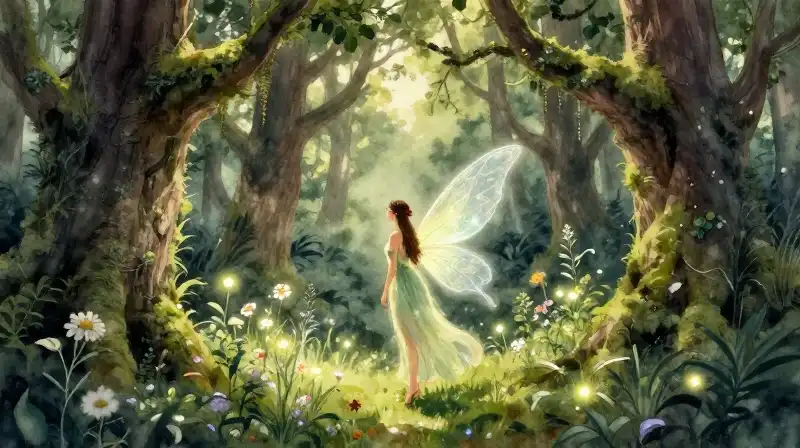
The foundation of Irish folklore lies in the concept of the *Daoine Sidhe*, or *Daoine Maithe*—spiritual entities that inhabit the land. These are not uniformly small, winged entities as modern popular culture often portrays them, but are instead beings intrinsically linked to the earth itself. They reside within ancient mounds (Sidhe), lush forests, and flowing streams 1. This association grounds the Fae in the land, making them integral to the very soil. In traditional Irish belief, the Fae are not a monolith. They are divided into distinct factions, most notably the Seelie (the more friendly or benevolent spirits) and the Unseelie (the darkly mischievous or volatile spirits) 1. These divisions reflect the duality of nature itself—the promise of beauty alongside the potential for danger. The Far Darrig embodies the mischievous element of the Unseelie. This faerie is often depicted with dark skin and a striking red coat, and its folklore is centered on practical jokes, but also on the deeply superstitious practice of swapping human infants with changelings, a belief rooted in the perceived power and secrecy of the Sidhe 1.
Guardians, Omens, and the Weight of Fate
Within this spiritual ecosystem, certain figures serve as crucial socio-cultural commentary, often acting as protectors, or, more frequently, as absolute harbingels of fate. One of the most poignant figures is the Banshee. Culturally, she is understood less as a generic ghost and more as a specific family guardian or an overseer of death (1, 2). Her terrifying wail is culturally significant because it is understood to signal impending doom, and notably, her presence is often tied to specific Irish family names (1, 2). Furthermore, her origins are tied to a historical struggle; her figure evolved from the songs of woe sung by grieving women in the 8th century, a practice that was later subject to theological disapproval by the Church 1. Similarly, the Dullahan functions as a terrifying omen, the classic headless horseman. Witnessing his passage is a recognized signal that death is imminent for those who observe him 1. These figures are not arbitrary; they are cultural anchors designed to help people navigate the uncertainty of life and mortality.
The Supernatural Past: Conflict and the Deep Mythology
The ancient layer of Irish mythology speaks to conflicts that define the very origins of the island. The Fomorians represent a race of ancient, hideous supernatural giants who are understood to be one of the earliest groups to settle in Ireland 1. Their existence represents an initial, massive clash of civilizations, particularly against figures like the Tuatha Dé Danann 1. Another figure of great antiquity is Abhartach. He is not merely a monster in the modern sense, but a figure representing one of the oldest recorded myths of a cruel dwarf king who ruled over his people in the area of Slaughtaverty 1. Over time, this figure was integrated into the broader folklore, sometimes being associated with modern vampiric archetypes, though his primary cultural role was that of an ancient tyrannical ruler, eventually defeated by chieftains and druids throughout the centuries 1.
Environmental Spirits: The Wild and the Water
The Irish landscape is characterized by its deep waters and rugged terrain, which have fostered a rich tradition of environmental spirits tied to specific locales. These figures embody the dangers and hidden majesty of the natural world. The Kelpie, for instance, is a malevolent water spirit found in the lochs and rivers of both Scotland and Ireland 1. It functions as a warning about the treacherous beauty of the wild, known for luring travelers into the water to drown them. This type of spirit is intensely local, tied to specific ecological spots. In similar vein are figures tied to particular geography:
- The Muckie: A creature whose existence is tied to the Killarney Lakes, currently maintained by localized sonar data and speculation 1.
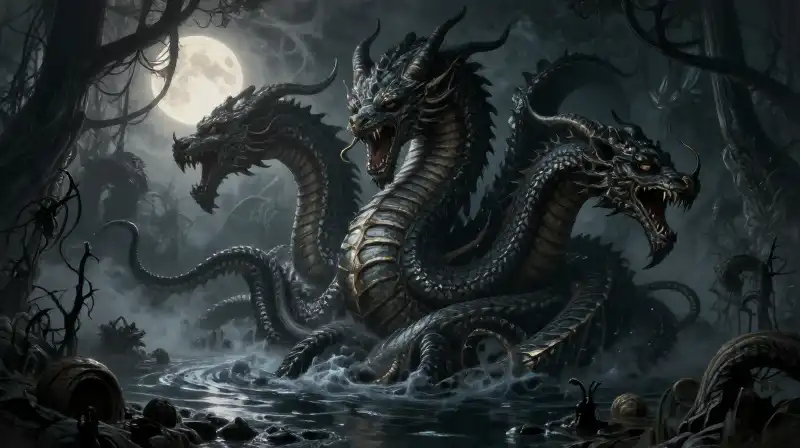
- The Oilliphéist: A vast, dragon-like Celtic monster capable of darkening the waters of ancient Irish lakes, documented in historical accounts of battles fought against it 1.
The Merrow, a mermaid-like Celtic creature, further blurs the lines between worlds, capable of traversing the boundaries of land and sea. It often presents a dual nature, appearing either as a gentle green-haired maiden or a grotesque merman 1.
Shapeshifters and Agents of Change
Some creatures transcend a single environment, operating as unpredictable agents of fortune. The Púca is celebrated in folklore precisely because of its unpredictable nature. It is a highly mischievous shapeshifter, known for adopting various animal forms, and its appearance brings unpredictable fortunes, whether good or ill 1. The mix of these entities helps explain why questions like, “Are Irish Celtic or Norse?” often arise—the true answer is that they draw from a deep, layered history of myth, including indigenous traditions that pre-date later European influences, making the culture complex and multi-layered.
The Human Connection: Tradition and Historical Memory
The richness of these beliefs often serves as a mirror to the human experience, even transcending the supernatural. The legend of the Fear Gorta (or Fear Gorta-The Hungry Man) is a powerful cultural testament to this. Unlike many myths based on conflict or fate, the Fear Gorta is culturally significant because its legend derives directly from the brutal historical reality of the Great Irish Hunger and famine 1. Similarly, the mythological battle between the ancient Fomorians and figures like the Tuatha Dé Danann 1 is often interpreted not just as a myth of war, but as an allegory for the clash between ancient, powerful forces and a burgeoning civilization. These creatures, therefore, are tools through which a culture makes sense of history, survival, and the natural forces that govern life.
Understanding the Living Tradition
In the context of modern folklore and the study of *Celtic folklore creatures names*, it is vital to understand that these beings operate in a space of cultural reverence, not merely as entertainment. They provide a framework for understanding the sacred relationship between the people and their environment. When engaging with Irish myths, the intent is not to seek a simple definition, but to appreciate the context: the geographical pressures, the historical struggles (like the Famine), and the profound belief in a world where the spiritual and the physical coexist. To genuinely understand the tradition is to respect that these stories are the living memory of a people and a landscape.
References
Footnotes
Frequently Asked Questions
What are the Fae creatures in Celtic?
The Fae, or Daoine Sidhe, are defined as spiritual entities that are intrinsically linked to the earth and inhabit ancient mounds, forests, and streams. These beings are divided into factions such as the friendly Seelie and the volatile Unseelie, encompassing diverse figures like the mischievous Púca and the dragon-like Oilliphéist.
Are Irish Celtic or Norse?
The culture is complex and multi-layered, drawing from a deep history of myth that includes indigenous traditions predating later European influences.
Related Articles