Seiðr: The Complex System of Norse Shamanism and Fate

Introduction
For those seeking to understand the traditional practices of the Norse peoples, the term “witchcraft” rarely captures the full scope of spiritual engagement. Norse magic, specifically known as seiðr, was not a simple repertoire of charms, but a highly complex system of shamanism dedicated to interacting with the threads of fate. Seiðr represented a profound attempt to bridge the chasm between the physical, everyday world and the vast, supernatural realm inhabited by spirits, ancestors, and the very forces that govern existence.
At its heart, seiðr was the practice of influencing the weaving of destiny. It provided its practitioners with the perceived ability to gain knowledge, offer prophecies, bestow blessings, or deliver curses—all through states of profound altered consciousness. To understand this tradition is to look beyond mere definition and recognize its function as a cultural mechanism for mediating the human relationship with destiny and the divine.
Entering the Supernatural: The Mechanism of Seiðr
The foundational element of seiðr was the act of entering a deep trance state. According to cultural accounts 1, practitioners believed that these states allowed them to transcend the limits of the physical self. This meditative or ritual journey enabled them to communicate with various entities—from the deceased to powerful supernatural spirits—and to observe the mechanics of the cosmos.
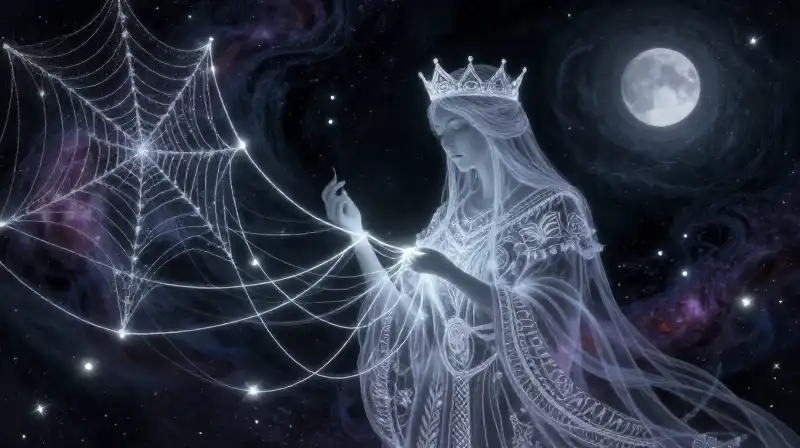
Central to this cosmic understanding was the influence of the Norns, the figures in Norse mythology who govern the threads of fate. Through seiðr, practitioners claimed they could manipulate or observe these threads. Ritual components such as galðr—a powerful song believed to unleash spiritual powers—further aided the process, alongside divination rituals known as spá 1. This was not passive prophecy; it was an active engagement with the forces that shaped the community.
Gender and Social Roles: The Völva and the Seiðmaður
In the social structure of the Viking Age, the practitioners of seiðr held distinctive, often precarious, positions. The practice was highly gendered, with the völva (meaning “shaman” or “prophetess”) serving as the primary archetype of the professional practitioner. While Freyja, the goddess, served as a divine model, the role of the völva within human society was complex 1. These women held culturally ambiguous statuses, commanding respect and perhaps even fear, depending on the circumstances of their community (1, 2).
Crucially, the role of the völva extended far beyond magic. They were often critical social figures, functioning as community counselors and mediators. This ability to influence social harmony demonstrates that their power was often deeply intertwined with social cohesion, acting as guides and interpreters of the community’s destiny 1.
Conversely, male practitioners were known as seiðmaður. Engaging in seiðr posed a significant social risk, as men could risk being labeled *argr*—an individual who rejected the established roles of masculine tradition 1. This illustrates the rigid gendered expectations that constrained the expression of spiritual authority in Viking society.
A Dual Authority: Benevolence and Power
To pigeonhole seiðr as purely negative—as a source of evil—is to miss its profound utility to the community. The application of spiritual influence was highly versatile, serving both extremely benevolent and destructive aims 1.
On the positive side, seiðr was utilized for vital communal needs: healing the sick, invoking good luck, or even providing protection, such as stopping destructive fires. The ability of a practitioner to address a crisis through ritual had immense social weight. On the opposing side, the practice included the capacity for destructive influence, such as cursing individuals, bringing blight to land, or causing physical injury 1.
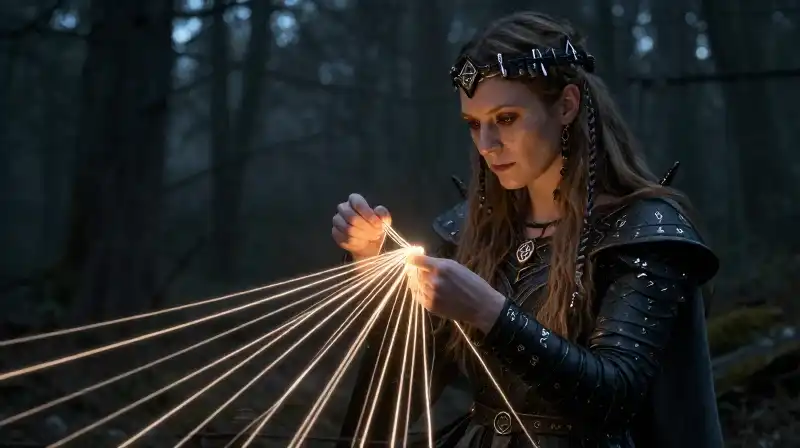
Historical sagas describe specific, detailed rituals used for these magical acts, including figures who would walk against the course of the sun while chanting or carving runes—demonstrating the sophisticated and intentional nature of the practice 1. This versatility highlights how seiðr was a tool of absolute power, capable of restoring balance or overturning it.
The Trajectory of Seiðr: From Court Magic to Modern Interpretation
Like many powerful spiritual traditions, seiðr underwent periods of decline. The widespread conversion of Norse society to Christianity fundamentally challenged the belief in fate as it was understood and ultimately led to the curtailment and outlaw of these forms of spiritual influence 1. As the ancient societal structures changed, the practice evolved from a recognized social role into a hidden or marginalized tradition.
In modern interpretations and the contemporary practice of Norse paganism, the concept of seiðr has found a new lens. Instead of always focusing on manipulation of external fates, modern practitioners sometimes interpret seiðr as a way to experience or understand states of altered consciousness or a perceived temporary loss of control during deeply immersive ritual 1. This modern reading focuses less on societal power and more on the personal, spiritual journey of the practitioner.
Understanding Seiðr Today
When considering the term seiðr, it is helpful to understand that it is far more than a list of spells; it is a complete cosmology. It dictates how one views power, relationship to nature, the role of gender in spiritual authority, and the inevitability of one’s destiny. Therefore, when researching Norse magic, one is exploring a belief system that valued profound connection—sometimes volatile, sometimes profound—to the fundamental forces of existence.
Ultimately, the tradition of seiðr offers a window into a world where the line between the mortal and the divine was profoundly permeable, where the guidance of a spiritual expert was considered vital for the well-being of the collective, and where the very fabric of one’s life could be negotiated with the hands of the fates.
References
Footnotes
Frequently Asked Questions
What is Norse witchcraft called?
Norse witchcraft is specifically known as seiðr. It is a highly complex system of shamanism dedicated to interacting with the threads of fate and bridging the gap between the physical world and the supernatural realm.
Related Articles