
The Meaning and History of Celtic Knots: Symbolism and Evolution

Introduction
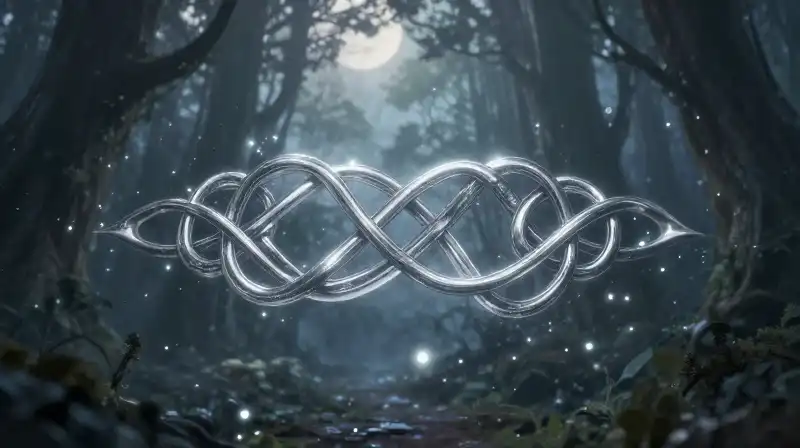
Celtic knots are far more than intricate patterns of interwoven lines; they represent a visual language, a deeply rooted expression of ancient Celtic philosophy, spirituality, and community cohesion. These complex, continuous designs—where no beginning and no end are apparent—served as powerful ornaments in art, jewelry, and stone carvings across the Celtic world. To understand a Celtic knot is not simply to decipher a geometric shape, but to grasp a tradition focused on the idea of “neverendingness” and the profound interconnectedness of life, the spiritual, and the natural world. While often associated exclusively with Ireland, the history of knotwork is a vast story of cultural migration, artistic evolution, and shared ancestral belief that spans the European Iron Age.
From Spirals to Infinite Loops: The Evolution of the Design
The development of the knot was not a sudden invention but a sophisticated artistic transition, evolving over centuries. Early Celtic art featured prominent spirals and simple step patterns, particularly during the Hallstatt culture, which influenced regions as far as France and Serbia in the late Bronze Age and early Iron Age 1. As culture shifted, knotwork emerged as a way to organize and ornament these themes. According to 2, the true knot designs developed following the period of increasing Christian influence around 450 AD. This period saw a notable change in aesthetic, moving away from simple interwoven cords—known as “plaits”—towards the complex, interlocking structures characterized by “broken and reconnected” lines that define authentic Celtic knotwork 1. This new style began to spread robustly into Ireland by the 7th century 1.
The stylistic scope of these designs is vast, extending from the Hallstatt culture to the highly detailed Insular art seen in medieval illuminated manuscripts like the *Book of Kells* and the *Lindisfarne Gospels*. In these contexts, the knots functioned not just as decoration, but as powerful visual carriers of cultural identity and sacred themes 1.
The Meaning Within the Infinite Loop
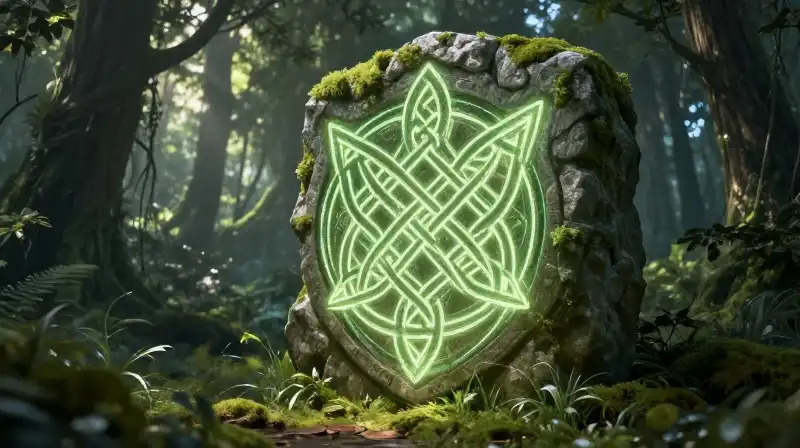
At its heart, the Celtic knot embodies philosophical concepts that resonate deeply within the culture it originated from. The primary theme of the endless loop is generally interpreted as “interconnectedness,” “universal harmony,” and “neverendingness” 1. This concept extends beyond a simple idea of infinity; it speaks to the cyclical nature of existence. Within ancient Irish beliefs, the unbroken path of the knot was often seen as directly linked to the cycle of life, death, and rebirth, strongly connecting the artistic tradition to beliefs regarding the afterlife and the constant flow of existence 1.
More than just abstract ideas, these symbols were believed to hold tangible power. Historically, knot designs were often imbued with magical or protective properties, leading them to be featured heavily in jewelry and other forms of personal adornment, where they served as both beauty and talisman 1. For certain motifs, the meaning became even more specific and vital. For instance, the triskele knot—which features three interlocking spirals—is specifically associated with the triple deity of Banba, Fodla, and Ériu in Irish tradition 1. In these contexts, some knots were not merely decorative flourishes, but powerful representations of the essential links between all living things in the natural world 1.
Regional Variations and the Legacy of Insular Art
When discussing Celtic knots, it is important to clarify that they do not belong to one single, monolithic tradition. While the designs are popular across modern culture, their historical roots and specific interpretations vary regionally. The term “Celtic culture” is also broad, as art historians have debated the use of the term “La Tène style” to categorize this art based on the location of certain prehistoric discoveries 1. Furthermore, the geographical distinction between Scottish and Irish traditions is often conflated in popular culture, but the specific use and cultural weight of knotwork vary between communities (Addressing People Also Ask). While a specific motif like the triskele has deep roots in Irish tradition 1, the overall tradition of knotwork, and the decorative use of Insular art, is shared across a wider cultural sphere.
From Stone Monolith to Modern Adornment
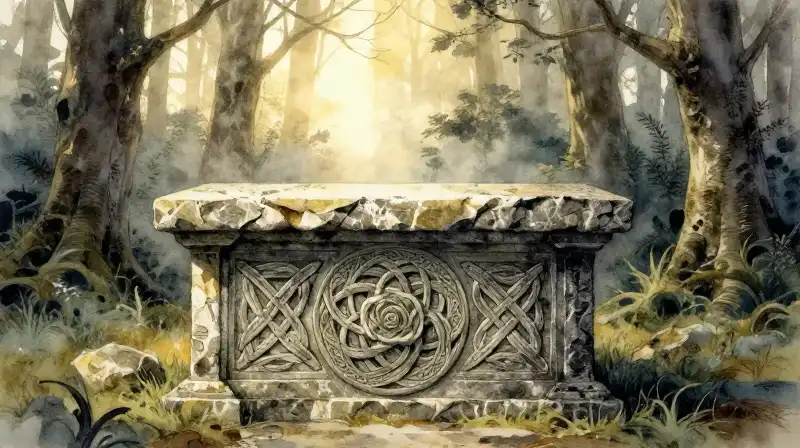
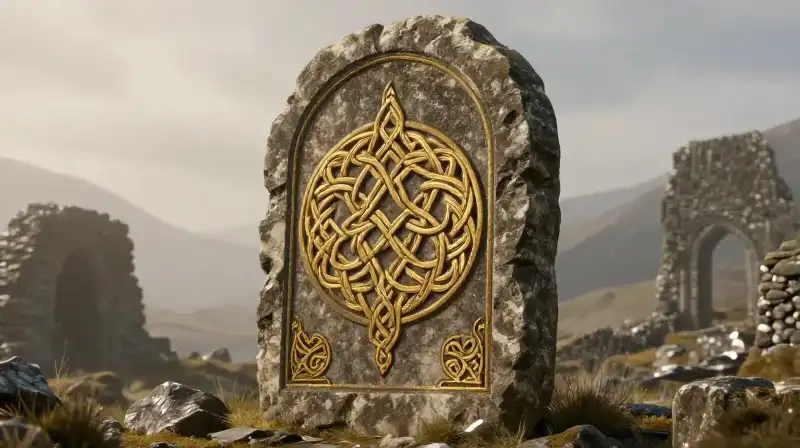
The transition of Celtic knotwork demonstrates the enduring appeal of this cultural symbolism. In antiquity, the designs were integral to monumental architecture and sacred sites. The presence of knot designs in stone carvings at locations such as the UNESCO World Heritage site of Newgrange illustrates their significance as powerful decorations within ancient, ritualistic environments 1. Their purpose was often to communicate deep cosmological beliefs within a physical, lasting medium.
In contemporary practice, the tradition lives on through artistic interpretations, jewelry, and tattoo designs (Related Searches). While modern adoption frequently focuses on the aesthetic “neverending” quality, it is beneficial for the reader to understand that these modern uses are interpretations of an ancient language. When engaging with the history and meanings of Celtic knots, the most meaningful connection is to approach them through the lens of interconnectedness—recognizing that the design itself is an affirmation of the world’s complex, beautiful, and continuous tapestry.
References
Footnotes
Frequently Asked Questions
Are Celtic knots Scottish or Irish?
Celtic knots do not belong to one single tradition, as specific interpretations and cultural weight vary between communities. While certain motifs like the triskele have deep roots in Irish tradition, the geographical distinction between Scottish and Irish traditions is often conflated in popular culture.
Related Articles