
Irish Knot Meaning: A Look at Insular History and Symbolism

Introduction
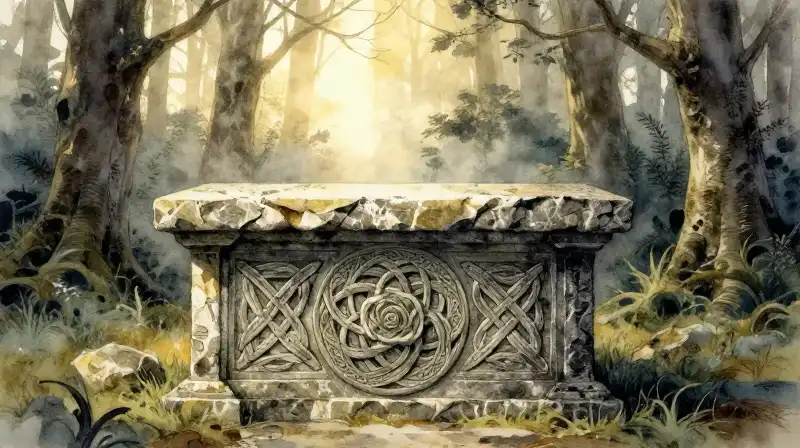
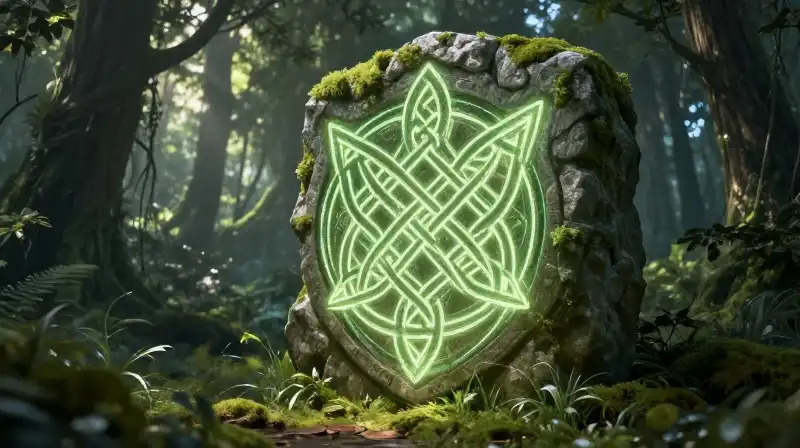
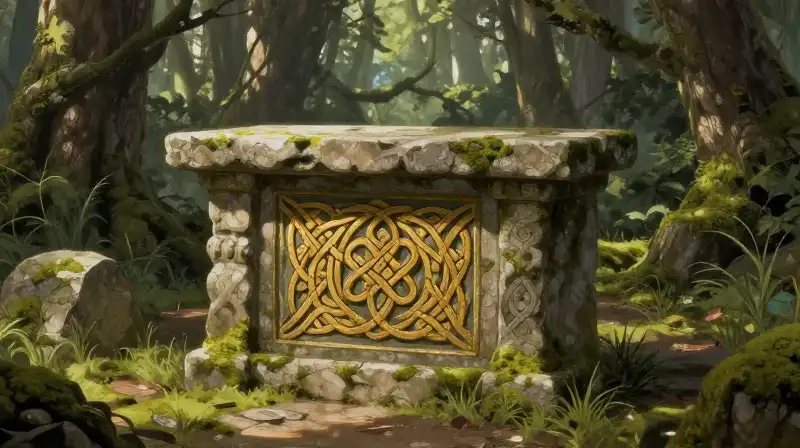
The intricate designs known as Celtic knots, and specifically the Irish knot, represent far more than a decorative flourish or a simple emblem of endless loops. Within the traditions of Insular art and Insular Christianity, these woven patterns served as a visual language, documenting complex ideas about connection, perpetuity, and the fusion of ancient heritage with new spiritual beliefs. To understand the Irish knot is to look into a vibrant period of historical convergence, where pre-Christian artistic motifs were absorbed and elevated within the cloistered, revolutionary environments of early medieval monasteries.
From Ancestral Motifs to Ecclesiastical Masterpieces
The presence of woven or interlocked patterns in Celtic art predates the cultural shift brought about by the arrival of Christianity, demonstrating that the tradition was not merely an invention of the monastic age. As historical evidence suggests, the knot motif was already a thriving element in the artistic fabric of the region even before Christianity took hold 1. The true transformation and spread of this tradition, however, occurred starting around 450 AD. With the advent of Christian monasticism, the need for elaborate illumination and manuscript decoration provided a powerful, sustained medium for the evolution of the design. Monks began incorporating these traditional patterns into religious manuscripts and artwork 1. A key early artifact of this tradition is a 7th-century Gospel Book fragment, now held at Durham Cathedral 1.
The Insular Art Legacy: Manuscript and Motif
The pinnacle of this artistic tradition can be seen in the surviving Insular manuscripts. The Book of Kells, for example, is considered a seminal example of Insular artwork developed from the confluence of Celtic heritage and Christianity 1. The incredibly complex and intricate Celtic knots found within this illuminated Latin manuscript illustrate the deliberate practice of blending existing, deeply rooted traditional designs with newly adopted Christian iconography 1. The refinement of this art form continued throughout the medieval period. The Lindisfarne Gospels, produced between 715 and 720 on the Isle of Lindisfarne, further document the sophisticated use of knotwork in ecclesiastical art. These designs showcase a remarkable synthesis, incorporating elements from Celtic, Germanic, and Irish artistic styles 1. Over centuries, the design complexity progressed dramatically, moving away from relatively simple early depictions toward the highly elaborate, interwoven plaits and knotted designs seen in the most mature Insular manuscripts 1. These manuscripts reflect a living, evolving art form where the knotted designs were not merely decoration, but a central narrative element of the tradition.
The Symbolic Language of Interconnection
When viewed through a cultural lens, the meaning of the Irish knot moves beyond a simple geometric pattern. It is often interpreted as a visual metaphor for the interconnectedness of life, illustrating the ceaseless cycle of existence—birth, death, and rebirth—that exists in many ancient cultures. The continuous, unbroken nature of the lines in these designs symbolizes eternity and the infinite cycles of nature and life itself. Within the context of the monasteries, the knots can be seen as a visual representation of the complex relationships between humanity and the divine, or the interwoven nature of the various spiritual influences being synthesized into a cohesive new identity. The patterns demand that the viewer’s eye trace a path with no clear beginning or end, mirroring the philosophical concept of an eternal spiritual journey.
Modern Expressions and Cultural Context
In the contemporary era, the Irish knot has transitioned from its original sacred context into a powerful, widespread cultural and personal symbol. Today, the various interpretations—including those associated with the “Trinity Knot” or specific regional names like the “Dara knot”—are frequently adopted in art, jewelry, and tattoos (Related searches). However, when examining the living practice today, it is essential to differentiate between the aesthetic adoption of the symbol and the spiritual depth of its historical origin. While the symbol is often used to represent love, life, or strength, the true significance lies in its historical role as an artistic medium that successfully preserved and synthesized the regional heritage of early medieval Ireland and Britain. The designs serve as a tangible connection to a long, resilient thread of Insular history.
Clarifying Common Understandings: Knots vs. Crosses
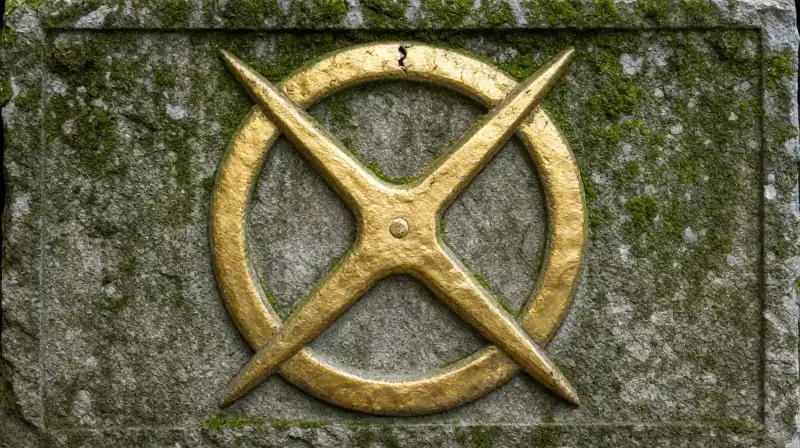
A common source of confusion for those interested in Irish heritage involves the distinction between the Celtic knot and the Celtic cross. These are often used in discussions of Irish spirituality, but they represent distinct elements of the tradition. The Celtic knot itself is a complex, woven design, symbolizing interconnectedness and eternity (Competitor Snippets). Conversely, the Celtic cross is a religious symbol—a cross where the ends of the arms flare out into a ring. The ring is widely understood to symbolize the eternal nature of Christ, or the sun, and is typically integrated with the knot motif to further strengthen the spiritual symbolism. While both are deeply rooted in Insular art, they serve different functions: the knot as an abstract representation of infinite flow, and the cross as a specific religious marker of faith.
Synthesis: The Enduring Significance
Ultimately, the tradition of the Irish knot is a testament to human creativity in the face of cultural transition. It is a living record of a community that took its deeply rooted, ancient artistic language and gave it new life within the framework of global spiritual exchange. To appreciate the knot is to understand that its beauty lies not just in its geometric perfection, but in the historical narrative of cultural synthesis—the way tradition endures, adapts, and continually finds new ways to tell stories of connection, both human and divine.
References
Footnotes
Frequently Asked Questions
What is the Catholic Irish knot?
The Irish knot is an intricate, complex woven design used in Insular art as a visual language documenting connection and perpetuity. Symbolically, its continuous, unbroken lines represent the interconnectedness of life and eternity.
Should Christians wear a Celtic cross?
The Celtic cross is a religious symbol—a cross whose arms flare into a ring. This ring is widely understood to symbolize the eternal nature of Christ.
Related Articles