Chthonic Terrors: The Scariest Greek Gods and Primal Forces

Introduction
In the study of ancient Greek culture, asking who the “strongest” or “scariest” god is reveals a foundational truth about the human relationship with power: true terror is rarely found in sheer physical might. Instead, in Greek mythology, the most formidable figures are often those who operate outside the neat hierarchies of the Olympian peak. They are the chthonic forces—the primal, elemental powers rooted in the earth, the night, and the boundary between life and death. The terrifying aspects of this pantheon are not always born of “evil” in the modern sense; they are often rooted in the incomprehensible. They represent forces humanity could not control: inescapable fate, the hungry void of the underworld, or the volatile nature of existence itself. For the ancient Greek communities, these deities were the personification of the unknown. Understanding their power requires looking past a simple list of attributes to see how their names and actions reflected the deep-seated fears of the people.
The Primal Terror: Chthonic and Primeval Forces
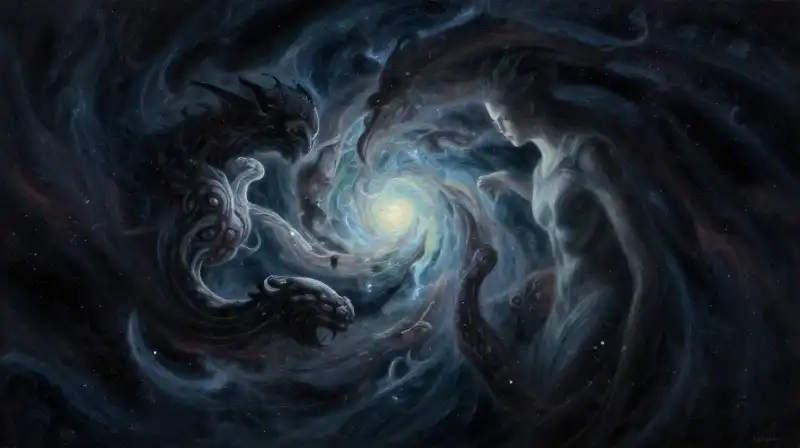
While the Olympian council held sway over the affairs of the living, the deepest fears were often reserved for entities that existed before the rise of the gods. These are the primeval forces—the gods of the void, darkness, and instability. These entities embody chaos and dread in their rawest form. Nyx, the primeval goddess of the night, is perhaps the most compelling example of this existential dread. She is depicted as a shadowy force trailing dark mists across the sky, a figure whose presence was so unsettling that 1 and 2 indicate she was feared even by Zeus himself. Her power is not rooted in political dominance but in her fundamental nature—the unending night that swallow all light. Similar in their terrifying antiquity are Erebus and Echion. Erebus embodies darkness, and Echion governs rivers of pain and tears. These figures represent elemental forces that are inherently unsettling and exist outside the Olympian framework. For the ancient populace, these beings were not merely monsters; they were the embodiment of forces so vast and uncontrollable that they defied categorization within the gods’ usual political dramas.
The Sovereigns of the Border: Death, Fate, and the Unspeakable
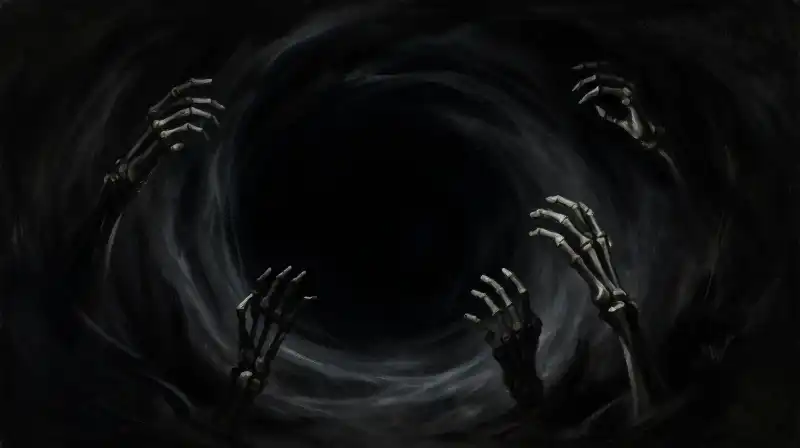
Perhaps more culturally resonant than the elemental gods are those governing transitions and hidden truths. These deities compel respect not because they are violent, but because their domain is absolute and unforgiving. The rulers of the Underworld—Hades and his queen Persephone—are frequently cited by scholars as among the scariest figures in this tradition (1, 2). This fear is often tied to the taboo nature of their existence; their names were whispered, and their attention was dreaded. They represent the ultimate boundary, the end of the journey where human concerns cease to matter. The terror of the hidden and the supernatural is most often embodied by Hecate. Culturally significant in various regions for her association with witchcraft and necromancy, Hecate is described not as a static figure, but as one who actively emerges from the underworld. Accompanied by spectral entities such as hell-hounds and vampiric Lamiae 1, she represents the intrusion of the divine horror into the mundane world. Some scholars even speculate that her immense, ancient power suggests she may be a Titanide with sway over sky, earth, and sea, potentially rivaling the established hierarchy 1. Furthermore, the fate of the living is held in the hands of the Moirai. Entities that control destiny or vital life force, such as the Moirai or Demeter (whose grief could trigger widespread famine that even Zeus struggled to manage, according to 1, 2), represent a fear of inevitable change and loss.
When Order Fails: Fear as a Result of Divine Will
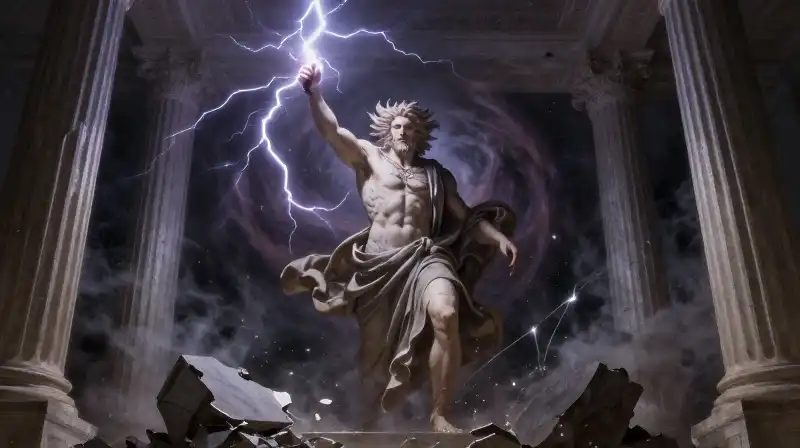
In Greek mythology, the most frightening gods are not always those who are fundamentally dark, but those whose passions or responsibilities impose unbearable existential threats upon mortals. These deities reflect the fear of arbitrary power and necessary consequence. Zeus is undeniably recognized as the supreme deity and ruler of the cosmos, but his position is complicated by his volatility. 1 notes that he is actively feared by his own subordinates due to his unpredictable temper and absolute authority. Other deities impose fear through their inherent nature. Aphrodite, the goddess of love and desire, holds a unique position of dread in some traditions because the power of love is seen as a force that can compel individuals to act against their will, overriding personal autonomy 1. Similarly, concepts related to the hidden aspects of the mind, such as Epialos (associated with nightmares), and the dual nature of dreams (Oneiroi, associated with truth or deceit, 2) highlight how the gods can manipulate our internal, vulnerable states. Even the role of the ritualistic traveler is steeped in somber dread. The Daemon-like figure of Charon, who demands a fee from the dead to cross rivers like Acheron, perfectly underscores the gravity of the boundary between life and the afterlife 1.
The Meaning of the Chthonic Tradition
For the communities who transmit these stories, the terrifying aspects of the Greek pantheon are less about cinematic gore and more about existential grounding. They are stories that reflect the limitations of human control over their own fate, the volatility of nature, and the eternal grip of the unknown. The presence of creatures like the Lamiae in the divine retinue of Hecate also serves a powerful cautionary function, embodying the horror of the human form being weaponized for predatory, devouring purposes 1. This is not just a tale of monsters; it is a warning about the potential for unchecked desire and the loss of humanity. Ultimately, the search for the “scariest” god leads the reader beyond a simple power scaling debate (a theme explored in online forums, 1) and into a deeper understanding of the Greek psyche. The tradition tells us that the greatest fears are not always the ones that scream loudest from the mountaintops, but the subtle, ancient forces—the pervasive dark mists of Nyx, the inescapable weight of the Underworld, and the sudden, paralyzing grasp of fate—that shape the contours of the world itself.
References
Footnotes
Related Articles