Clíodhna: The Irish Goddess of Love and the Legend of South Munster

Introduction
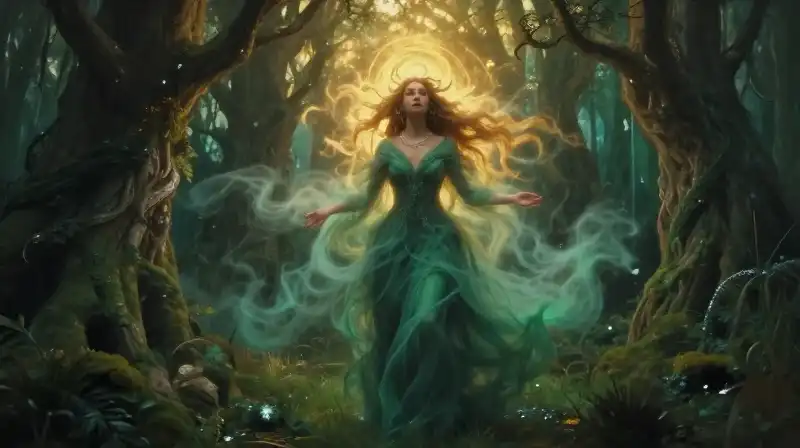
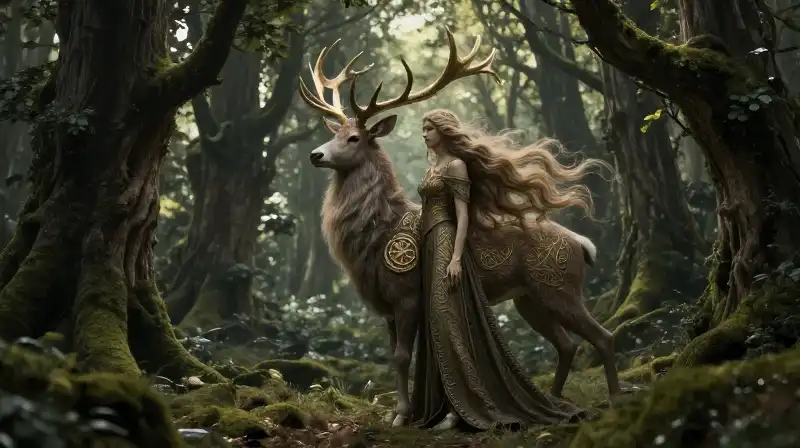
In the tapestry of Irish heritage, few figures resonate with the fierce regional specificity and enduring poetic beauty of Clíodhna. She is not merely a figure from a mythical text; for generations within the communities of South Munster, particularly in Desmond, Clíodhna functions as a deeply rooted cultural identifier, a guardian of local identity, and a focal point for the region’s complex relationship with the wild and the Otherworld. While modern interpretations often cast her as a purely romantic goddess of love, her story is far richer, weaving together elements of beauty, the fierce sovereignty of the land, and the mysterious boundary between the human world and the magical realm.
Her narratives are tied intrinsically to the geography of South Munster, defining a localized tradition that transcends general Irish mythology. To understand Clíodhna is to understand the delicate balance of ancient lore and persistent local belief, a powerful example of how a cultural tradition can be adapted and maintained through centuries of shifting societal structures.
The Sovereignty of South Munster and the Ancestral Lineages
Clíodhna’s presence is inextricably linked to the landscape of South Munster. According to cultural records 1, she is primarily associated with County Cork, making her a revered figure in the local lore of Desmond. This connection is far more than geographical; it is a matter of ancestral lineage and historical identification. Within local tradition, Clíodhna became intrinsically tied to the dominant regional dynasties, including the powerful MacCarthy dynasty, as well as the O’Keeffe and FitzGerald families 1.
This integration solidified her as the “fairy woman” of these specific lineages. The traditional stories anchor her presence to locations like Carrig-Cleena, situated near the town of Mallow 1. This localized nature demonstrates how mythical figures often cease to be universal deities and instead become potent symbols of regional pride and protection for the people who inhabit the land. Clíodhna thus acts as a living cultural marker, grounding the ethereal nature of the fae in the specific soil of Munster.
Narratives of Beauty, Power, and the Otherworld
The mythical foundation of Clíodhna focuses heavily on her immense beauty and sovereignty. Ancient tales reference her as a goddess of love and beauty 1, and her stories have appeared in medieval literature such as *Acallam na Senórach*, most notably in the legendary tale of “Cleena’s Wave” near the harbour of Glandore 1. In these classical narratives, her origins are tied to the deeper structures of myth, such as the story of the Druid and his two daughters, where the elder sister, Cleena, is explicitly named “the queen of the fairies” 1.
However, the evolution of the tradition shows how Clíodhna has absorbed elements from broader Celtic folklore. The association of her with the banshees of the Tuatha Dé Danann—a powerful supernatural grouping—and the subsequent ties to the “fairies” are elements that solidified in later periods, specifically the 19th-century revival of folklore 1. Because of this historical layering, modern practitioners and students must be cautious: while she is popularly compared to figures like Aphrodite, historical Celtic texts do not consistently provide universal, defined “domains” of love or beauty for their deities 1. Her role is often less about prescriptive functions and more about embodying a sense of profound natural wonder.
The Symbolism of Wonder: From the Sea to the Emerald Cup
Clíodhna is strongly associated with natural phenomena and the magical capacity of the land. Her connection to the sea is beautifully illustrated in the legend of “Cleena’s Wave” 1, leading to a modern tradition where seashells are often offered as a tribute 1. Furthermore, her symbolic attributes speak to a world of transformative power. She is sometimes depicted as bringing profound wonder through highly symbolic imagery: three brightly coloured birds whose sweet song has the power to heal sickness, or the miraculous provision of an emerald cup that can transmute common water into wine 1.
Clíodhna in Contemporary Interpretation
For contemporary followers and researchers, Clíodhna represents an intersection of the magical and the mundane. Modern discussions often interpret her not as a strict ancient “god of X,” but as an embodiment of the Otherworld’s influence on the natural world 1. This shift allows her role to incorporate modern concepts of magic and natural wonder. While historical accounts focused on her profound beauty, modern interpretations frequently highlight her regal connection to the natural environment and her relationship with the fae. It is important to note that intense focus on specific visual symbols—such as the specific colors pink, green, and blue—is largely a modern, devotional tradition and is not universally recognized as part of historical Celtic practice 1.
Ultimately, Clíodhna serves as a bridge. She connects the ancient, rooted mythology of the Druids and the powerful dynastic histories of Munster with the living, fluid expressions of modern folklore and magical interest, maintaining her status as a powerful symbol of Irish identity.
Who is the Irish Goddess of Joy and Beauty?
When asked about a definitive “Irish goddess of joy,” the term Clíodhna fits the spirit, if not the strict definition. Her reputation across diverse appearances is that of a figure of profound, radiant beauty (1, 2). While ancient texts did not always assign a single “domain of joy,” the enduring imagery of her three healing birds and her association with transformative, wonderful acts (like the emerald cup) positions her as an archetype of vital, potent life and beauty.
In the broader context of “Celtic goddess” studies, Clíodhna is a powerful example of a regional deity whose attributes—such as beauty, sovereignty, and connection to the fae—are shared with other traditions, yet her particular grounding in South Munster and her dynastic ties make her a unique regional powerhouse.
Synthesis: The Enduring Meaning of the Legend
Clíodhna’s journey from a mythical figure in *Acallam na Senórach* to a vibrant focal point of local practice in South Munster demonstrates the resilience of cultural tradition. She functions not as a fixed statue, but as a living echo of the land itself. She represents the fierce beauty of the Irish landscape and the ancient, magical power that persists beneath the surface of modern life. Whether viewed through the lens of ancient lineage or modern reverence, Clíodhna remains a potent reminder of how local, regional stories hold the deepest and most enduring cultural meaning for a community.
References
Footnotes
Frequently Asked Questions
Who is the Irish goddess of joy?
Clíodhna is identified in the article as the figure that fits the spirit of an Irish goddess of joy, even if ancient texts did not consistently assign a single domain of joy. Her reputation is built upon her profound, radiant beauty and her association with transformative and wonderful acts, such as the emerald cup.
Who is a Celtic goddess?
Clíodhna is a regional Celtic deity primarily associated with South Munster, embodying fierce regional specificity, profound beauty, and sovereignty. In ancient tales, she is described as a goddess of love and a queen of the fairies, linking the human world with the magical realm.
Related Articles