Heracles: The Complex Myth of the Divine Greek Hero

Introduction
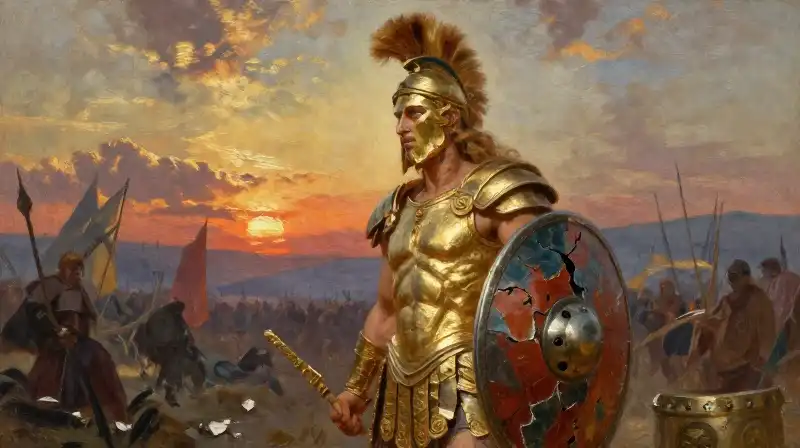
Heracles, the figure of the colossal Greek hero, is far more than a statue of brute strength; he is a central cultural archetype embodying the agonizing journey from mortal flaw to divine transcendence. He represents the tension between human suffering and ultimate apotheosis, a theme that resonated profoundly in the ancient Greek worldview. To understand Heracles is not simply to recount his feats, but to recognize him as a dynamic representation of the “hero and god” duality—a being who navigated the complex line between human vulnerability and Olympian power (1, 2). This figure, often romanticized as a straightforward champion, holds layers of narrative complexity, rooted in ancient shamanistic traditions and later codified within the highly organized structure of the Olympian Pantheon 1.
The Paradox of Divinity: Hero and God
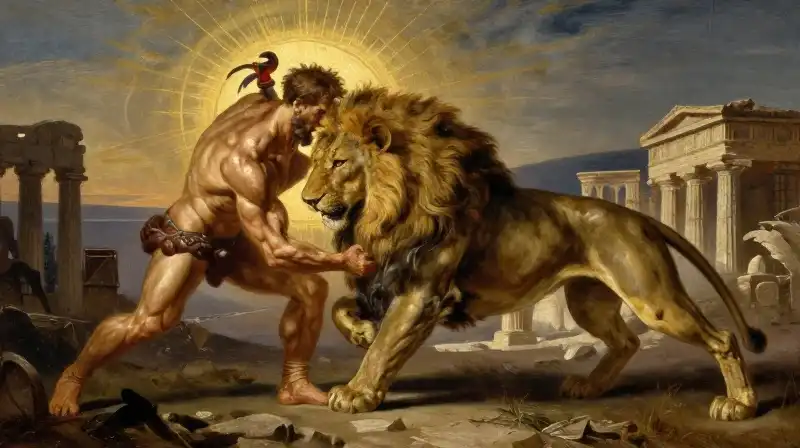
The foundational understanding of Heracles begins with a paradox. He is described simultaneously as a magnificent mortal hero and as a burgeoning deity. According to 1, he is depicted as a descendant of Perseus, placing him within a lineage of powerful figures. Yet, his initial status is one of intense struggle. This complexity is visible in his iconography: he is always shown wielding immense physical power (the lion skin and club), but often also demonstrating cunning—a crucial trait that allowed him to succeed when raw strength failed (1, 2). Culturally, this duality allowed Heracles to serve multiple functions within society. He represented an accessible ideal of striving—a being who was powerful enough to protect mankind but flawed enough to recognize the necessity of penance. In his early life, he embodied the chaotic, human element of the world. As the narrative progresses, however, his ascent to the divine realm symbolizes the ultimate resolution of conflict, transforming his suffering into a form of grace and eternal power 1.
The Path of Penance: The Cycle of the Twelve Labours
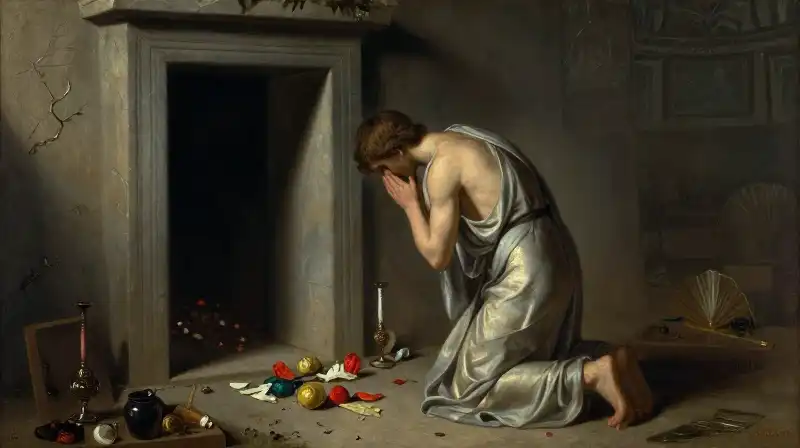
The enduring narrative structure of Heracles’ life is dominated by the Cycle of the Twelve Labours. These were not merely a series of tasks, but a grueling penance imposed by Eurystheus following a tragic period of madness that led Heracles to commit a devastating act against his own family 1. The Labours, therefore, serve as the crucible of his character, forcing him to confront the limits of his own power and the consequences of his actions 1. This narrative framework is vital to the cultural meaning of the tradition. The Labours illustrate that true strength is not just physical, but moral. The acts are designed to purge his mind and redeem his soul. 2 notes that this cycle defines his myth, showcasing his monumental efforts to cleanse the world and prepare for his ultimate ascent. Through these arduous tasks, Heracles becomes more than a strong man; he becomes a figure who has earned his divine place through relentless suffering and effort (1, 2).
Living Practice: The Cult of Heracles and Its Regional Variation
For the communities who embraced him, Heracles was not merely a tale but a patron and a focus of worship. His cult was notably diverse, spreading across the classical world and adapting to local beliefs. 1 highlights that regional cities often adopted him as their patron, as seen in Heraclea. This localized worship allowed his meaning to shift—from a terrifying, passionate figure capable of horrific vengeance to a benevolent benefactor capable of great deeds 1. Culturally, his role often aligned with the development of young men. He was invoked by leaders of gymnasiums and ephebes (young warriors) as a patron of war and physical discipline 1. The tradition embraced both his terrifying power and his emotional depth, viewing him as a highly passionate figure 1. Crucially, his life dictated specific ritual practices tied to both pain and transcendence. His enduring presence in mourning rituals stemmed from his suffering, while his later role in the mysteries reflected celebratory, divine states 1.
The Metamorphosis: Death, Poison, and Apotheosis
The culmination of the Heracles myth is his transformation into a god. His final death, stemming from the deadly poison of Nessus’ blood, is not an ending, but a catalyst for his apotheosis. 2 explains that this event marks the moment his divine essence successfully detached from his mortal remains, which were consumed by fire as his spirit ascended to heaven 1. This transformation provides the ultimate symbolic resolution to the entire cultural narrative. It confirms that the immense suffering and the disciplined completion of the Labours were the necessary prerequisites for achieving divine status. His death is the ultimate testament to the triumph of the spirit over the body, turning a tragic figure into an eternal pillar of the pantheon.
The Wider Echo: Cross-Cultural Influence on Tradition
The influence of the Heracles tradition did not remain contained within the classical Greek sphere. Its appeal—the massive, strong, yet emotionally rich archetype—allowed it to be adopted and adapted by other cultures 1. 1 confirms his spread, noting his identification with figures such as the Phoenician God Melqart and adoption by the Etruscans. This cross-cultural adoption shows the power of the archetype itself. The cultural weight of a character like Heracles transcended language and geography, demonstrating that the narrative of the hero-saint—the figure who overcomes impossible odds to become a higher power—is a universal human desire.
Distinguishing Heracles and Hercules: Navigating the Names
For those seeking to understand the origins of the figure, the distinction between Heracles and Hercules is a common source of confusion. While the figures are the same, the shift in nomenclature is deeply rooted in political and historical context. In Rome and the modern West, the name “Hercules” emerged, gaining political significance as Roman emperors often chose to align themselves with this figure 1. The name Heracles, however, retains its primary association with the foundational Greek mythological narrative, focusing on his role as a champion of the Olympian order 1.
Summary of Meaning: The Embodiment of the Struggle
Ultimately, the tradition of Heracles in Greek culture is a sophisticated exploration of human potential and inherent flaws. He is the embodiment of the disciplined struggle—showing that even a figure of immense power must undergo purification, penance, and deep emotional confrontation to achieve their highest form. His legacy, visible in extensive art and literature, is that of a powerful, amorous, yet profoundly complex man 1. He teaches that even in the face of profound suffering, the path to lasting glory—and potential divinity—is paved with courage and endurance.
References
Footnotes
The Mythological Path to Heracles' Apotheosis
Undergo a state of devastating madness
The journey begins with a tragic period where the hero commits a devastating act against his own family, setting the stage for his penance.
Perform the Twelve Labours
Complete the cycle of twelve grueling tasks, which serve as a form of penance designed to purge the hero's mind and redeem his soul.
Sustain a final, tragic death
His mortal life culminates in death, specifically through the deadly poison of Nessus' blood.
Achieve divine transcendence (Apotheosis)
The tragic death acts as a catalyst, allowing the hero's divine essence to successfully detach from his mortal remains and ascend to heaven.
Related Articles