The Definitive History of Famous Greek Mythology

Introduction
Greek mythology is far more than an archive of fantastical creatures or dramatic stories; it is the foundational language through which ancient communities sought to explain the complex realities of their existence—be it the cyclical movement of the seasons, the origin of their city-states, or the inevitable tension between humanity and the divine. For a society rooted in the Mediterranean world, these narratives served as the glue, weaving together political aspirations, spiritual beliefs, and a shared cultural identity. Understanding these traditions requires looking past simple character definitions to recognize their function as a mirror reflecting the Greek world itself.
The Oral Genesis of the Myth
Before the codified literary texts we recognize today, Greek mythology lived as an oral, vibrant tradition. According to 1, this practice likely began in the 18th century BC, propagated by singers and poets originating from the Minoan and Mycenaean cultures. Myth was a dynamic, living art, shaped by the performance itself, rather than a static written decree. These narratives were essential to the cultural practice of the time; they helped structure religious institutions and offered a sophisticated commentary on the nature of mythmaking itself in ancient Greece. The peak of this oral tradition is found in narratives like the *Iliad* and the *Odyssey*, which reflect the heroic experiences of the Greek “age of heroes” 2. These epics provided the primary template for the tales, framing the human experience through monumental struggles, divine intervention, and the search for belonging.
Cosmic Order and the Gods’ Domain
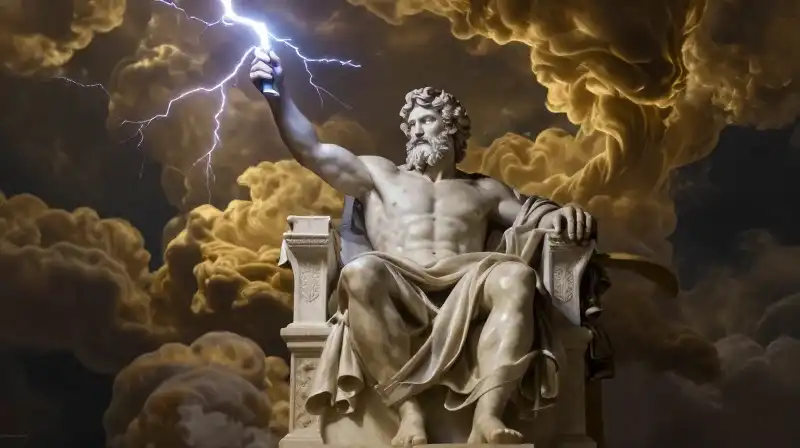
The Greek myths operated on a profound system of aetiology—the attempt to explain how things came to be. The hierarchy of the gods, traced through theogony narratives like the clash between Cronus and Zeus, established the succession of divine rulers and provided a mythological account of the world’s beginning 2. The divine order was often used to validate cultural norms and political structures. For instance, the origin of the city of Athens is not merely a story, but an aetiological basis for its cultural identity. The contest between Athena and Poseidon to bestow a gift upon the burgeoning city illustrates how myths were used to explain regional priorities, leading to the selection of the olive tree and thus embedding a symbolic feature into the city’s identity 2.
The Weight of Fate and Human Struggle
A recurring and pervasive theme in Greek thought was the concept of fate. This was not a deterministic force that made free will irrelevant, but rather a deeply ingrained tension that defined the human experience. The Moirae—Clotho, Lachesis, and Atropos—represented this concept as three goddesses who controlled the life thread, spinning, measuring, and finally cutting it for both mortals and immortals 2. This interaction between divine and human will led to powerful narratives about resilience and sacrifice. Prometheus, chained to a rock by Zeus for gifting fire to humanity, exemplifies a cultural awareness of the fraught relationship between the gods and mankind (3, 2). Similarly, themes of *hubris*—excessive pride—and the subsequent tragic downfall of figures like Achilles or Oedipus became central to classical Athenian drama, shaping the moral and social discourse of the time 2.
Myth as Cosmic Time: Cycles of Nature
Perhaps the most accessible mythological explanation relates to the physical world. The relationship between Hades and Persephone, involving her abduction and the consumption of six pomegranate seeds, provides a mythological framework for the seasonal cycle. This tale explained the cyclical nature of the earth and the rhythm of crops, grounding the abstract divine world in the practical realities of an agricultural community 2. This blending of the cosmic with the practical is why these stories persist. They are not merely tales of gods; they are accounts of how people lived, struggled, and understood their place in a changing world.
The Codification and Preservation of Myth
As Greek society evolved, the oral traditions needed to be preserved, curated, and eventually codified into literary forms. Archaeological evidence shows that myths were visually represented long before full documentation; geometric designs on pottery from the Geometric period, for example, suggest an early visual language for these narratives 2. Later efforts, such as the Library of Pseudo-Apollodorus, functioned as foundational mythographical handbooks. These works were attempts to reconcile the often contradictory versions of tales found among the various poets 2, moving the tradition from a decentralized oral one to a recognized, albeit often fractured, literary canon.
Enduring Themes and Living Connections
While the classical period gave us the definitive narratives, the themes of Greek mythology remain intensely personal and relevant. Readers often find resonance in specific narratives, whether it is the romantic exploration of Eros and Psyche or the enduring, desperate quest for home depicted in the *Odyssey* 2. In contemporary culture, these myths continue to be a wellspring of inspiration for Western art and literature 2. The “famous Greek mythology” characters and stories transcend their ancient origins because they offer a comprehensive map of the human heart: the quest for immortality, the pain of loss, the struggle for agency, and the weight of destiny.
Exploring Specific Figures and Stories
The depth of this tradition allows for focused inquiry into its most celebrated figures. If one asks, for instance, “Who bathed Achilles?” within the tradition of the *Iliad*, this is answered by the priest Ajax, a detail that highlights the intimate, ritualistic nature of the heroes’ lives, a moment that transcends the battle itself to reflect the cultural reverence for the fallen warrior. Similarly, the enduring influence of figures like Heracles and the deep dive into the existential angst of figures like Oedipus ensure that the tradition remains a rich source of study for those seeking to understand the psychological facets of the human condition.
Conclusion
Greek mythology serves as a vital cultural heritage—a legacy of human attempts to make sense of the vastness of the cosmos and the fragility of life. It is not a history *of* myths, but a history *shaped by* them. For the modern reader, engaging with these stories is an opportunity to participate in a continuous conversation, a living tradition that continues to inform how we approach themes of heroism, tragedy, fate, and identity.
References
Footnotes
Frequently Asked Questions
Who bathed Achilles?
The tradition of the Iliad answers that the priest Ajax bathed Achilles.
Related Articles