Aegean Sea: Greek Mythology and the Origins of Its Name

Introduction
To understand ancient Greek civilization is to understand the Aegean Sea. More than just a body of water, the Aegean has functioned as the central conduit for the region’s cultural, commercial, and political development, bridging the gap between the civilizations of Europe and Asia 1. Its waters shaped the myths, movements, and very identity of the people who called it home. The name itself is not merely a geographical label; it is a repository of ancient folklore, linguistic speculation, and tragic heritage.
The Lingering Theories of Its Origin
For scholars and historians, the origins of the name *Aigan* (Aegean) have long been the subject of debate, with multiple theories vying for precedence, reflecting the deep intersection between natural observation and linguistic evolution 1. One prominent theory suggests a visual origin rooted in landscape. Many islands rising from the water were interpreted by ancient observers as resembling a large herd, leading to suggestions that the name derived from the Greek word aiges, meaning “goats” 1.
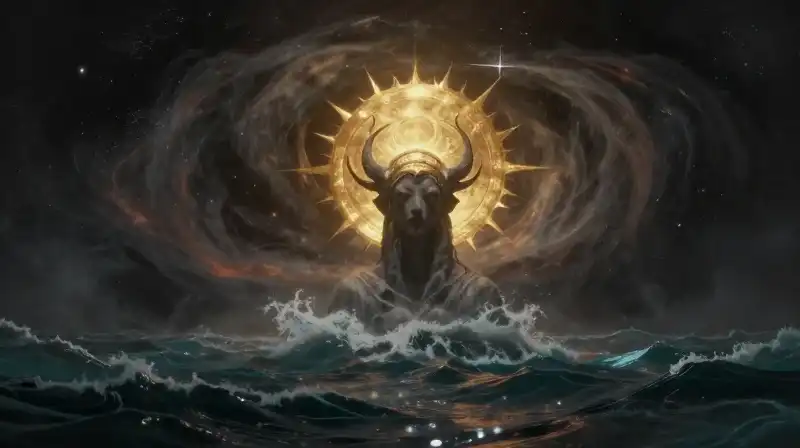
Other etymological possibilities delve into the powerful religious geography of the region. The name may be linked to aigōn, a sacred island dedicated to Poseidon, the mighty sea deity, or perhaps to a specific rock, known as *Aex*, that allegedly bestowed the sea’s name upon it 1. A more metaphorical interpretation proposes that the name stems from the phrase αἐί γαῖα, meaning “because the land is always in sight” 1, a description perfectly suited to the archipelagic nature of the sea. While these linguistic theories are rooted in the landscape and the gods, they often share a common theme: the sea’s connection to the powerful deities of the Mediterranean, particularly Poseidon 1.
The Narrative of Aegeus: Tragedy and Immortalization
While the linguistic theories offer a factual exploration of the sea’s name, a far more evocative account comes from the domain of folklore—a narrative that transforms a simple geographical feature into a monument of human grief. According to local traditions, the sea’s existence and name are intrinsically tied to the myth of Aegeus, an ancient King of Athens 1.
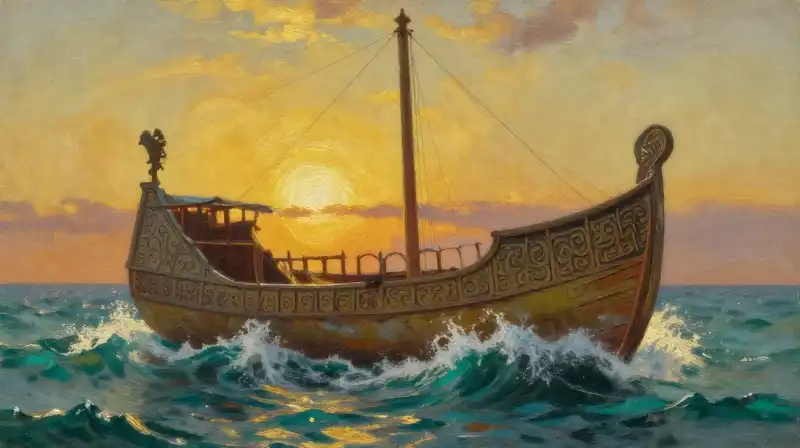
The legend recounts the story of Aegeus, a descendant of the legendary figure Pandion, who was raised by the powerful sea god Poseidon 1. In a pivotal moment of personal sorrow and foresight, Aegeus harbored deep anticipation over the fate of his son, Theseus. The depth of his grief and foreboding led him to a profound sacrifice, plunging into the deep Aegean waters 1. In a final, lasting act of cultural inscription, Theseus bestowed the name “Aegean” upon the sea to eternally honor his father and immortalize that pivotal, sorrowful event in the shared cultural memory 1.
From Mythology to Identity: The “Greek Sea” Concept
The duality of the sea’s naming—the scholarly debates regarding goats and sight, and the enduring tragedy of Aegeus and Theseus—is representative of a broader cultural phenomenon. Historically, the region did not simply refer to the Aegean as a body of water, but often identified it as the “Greek Sea” in classical authorship 1. This designation signifies that the sea was never viewed in isolation; it was an extension of the Greek cultural sphere, a crucial stage upon which the defining stories, political struggles, and cultural exchanges unfolded.
This perception, whether born of the mythological narrative or the physical reality of its history, elevates the Aegean from a mere geography into a shared cultural heritage. The sea, therefore, acts as a living map of the traditions and the shared history of the communities that define the region. It stands as a testament to how profound cultural narratives, even those rooted in tragedy, can fundamentally shape our understanding of the world around us.
References
Footnotes
Related Articles