Decoding the Four Symbols: Mythology and Cosmology of Chinese Guardians

Introduction
In the vast landscape of global traditions, certain mythologies function not merely as stories, but as deeply held maps of reality. For communities across the Sinosphere, the Four Symbols represent precisely this—a cosmic framework that governs the unseen order of the world. These figures, often translated as the Four Guardians or Four Auspicious Beasts, are far more than mythological creatures; they are pillars of a vast cultural and spiritual system. They define the flow of the seasons, the rhythm of nature, and the relationship between humanity and the divine. To understand the Four Symbols is to gain insight into a foundational belief system that attempts to harmonize the chaotic movements of the natural world into a predictable, sacred rhythm.
The Cosmic Blueprint: Meaning and Mapping
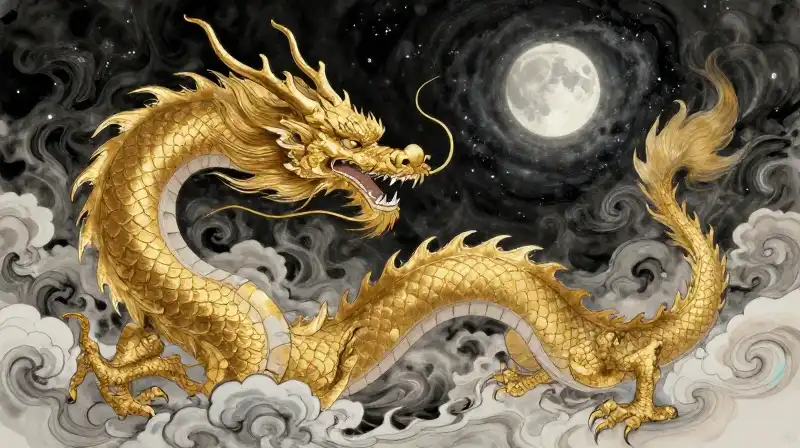
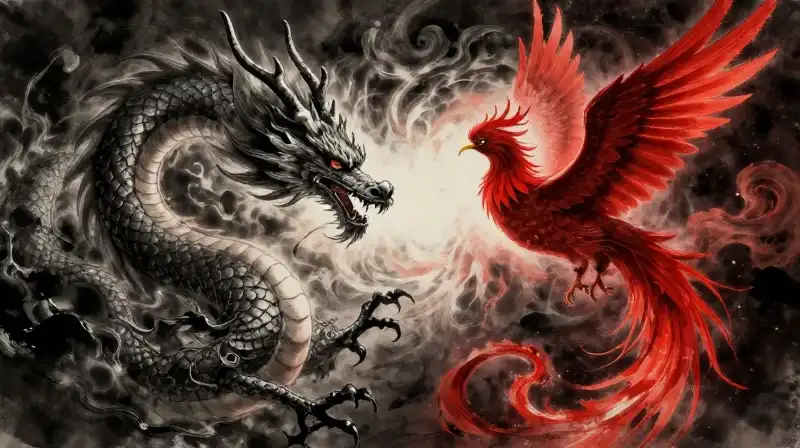
At the heart of the Four Symbols lies the concept of cosmic equilibrium, a belief codified in Chinese cosmology. These beasts—the Azure Dragon of the East, the Vermilion Bird of the South, the White Tiger of the West, and the Black Turtle-Snake of the North—are assigned to the four cardinal directions, acting as eternal protectors of those realms 1. However, their role extends far beyond mere directional geography. Each creature is simultaneously imbued with a unique set of attributes drawn from the sophisticated Five Phases (Wuxing) system. The symbolism is intricate and multifaceted:
- Direction and Element: The Azure Dragon aligns with the East and the element of Wood; the Vermilion Bird with the South and Fire; the White Tiger with the West and Metal; and the Black Tortoise with the North and Water 1.
- Virtue and Season: Each symbol is also tied to a specific seasonal aspect, emotional quality, and moral virtue.
This intricate layering is what gives the system its depth. For the observer of this tradition, the Four Symbols serve as a living calendar, linking the macrocosm (the universe) to the microcosm (daily life and fortune), providing a divine narrative for the cycles of growth, warmth, decline, and rest.
The Nuances of the Divine: Evolution and Exclusion
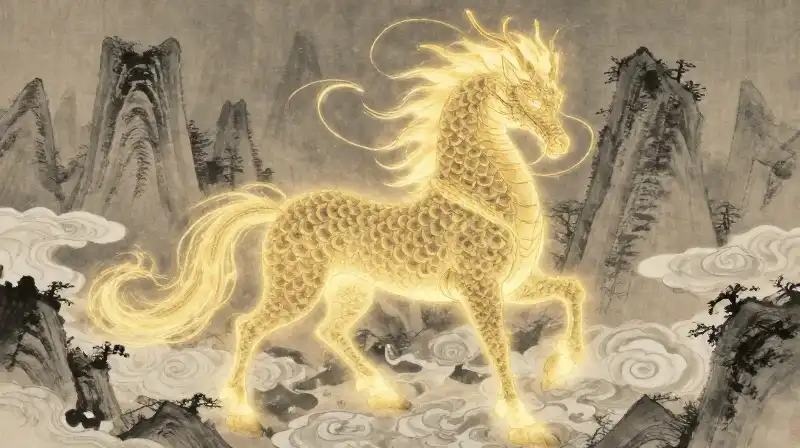
While the traditional focus remains on the four cardinal guardians, the cosmological landscape of Chinese mythology is rich with subtle yet vital complexities. The exclusion of certain figures and the evolution of these myths require careful unpacking. For instance, the powerful Yellow Dragon, which embodies the element of Earth, is central to the cosmic center but is frequently noted as distinct from the cardinal Four Symbols 1. The Yellow Dragon holds a specific, authoritative status; it is considered the zoomorphic incarnation of the Yellow Emperor (Huangdi), a figure who embodies imperial power and the absolute center of the universe 1. This distinction is crucial: the Four Symbols guard the boundaries, while the Yellow Dragon represents the authority of the heart of the cosmos. Furthermore, the language used in Chinese folklore often creates conceptual overlaps. There is a subtle variation between the Four Symbols (Sì Shèng Shòu), which strictly govern the cardinal directions, and the broader concept of the Four Holy Beasts (Sì Líng). This latter group encompasses a wider array of powerful, auspicious animals, including the Dragon, the Fenghuang, the Qilin, and the Turtle 1. This difference illustrates how traditional categorization can sometimes be flexible and subject to regional or narrative interpretations within the wider mythological framework.
Living the Cosmology: How the Symbols Guide Culture
The enduring power of the Four Symbols lies in their ability to transition seamlessly from sacred text to living cultural practice. They are not merely ancient relics; they inform modern Chinese design, geography, and philosophical outlook. In art and architecture, the symbols manifest as protective iconography, appearing on structures and artifacts to ensure harmony and balance in a space. The historical roots of these depictions are remarkably deep, with early evidence tracing back as far as 5300 BC in Henan, though the configuration we recognize today developed over centuries 1. Beyond aesthetics, the concepts drive deeper philosophical inquiry. In the framework of the *I Ching*, for example, the Four Symbols are understood as fundamental ‘Four Images’ generated from the ‘Two Modes,’ which then generate the foundational Eight Trigrams 1. This shows that the symbols are not isolated characters; they are part of a unified, generative system of thought. Taoism has further enriched this framework by assigning specific human identities to the guardians, such as assigning the Azure Dragon the human form of Meng Zhang and the Vermilion Bird the form of Ling Guang 1, grounding these abstract forces in human character and tradition.
Clearing the Mist: Decoding Common Confusions
The complexity of the tradition often leads to confusion, particularly when comparing the various interpretations of the divine beasts. For the reader seeking a clear understanding, several key distinctions must be clarified: 1. Four Symbols vs. Four Holy Beasts: The Four Symbols are a specific set of cardinal direction guardians; the Four Holy Beasts are a broader category of powerful, auspicious creatures, which can include the Four Symbols but also others. 2. The Yellow Dragon: This entity is the spiritual manifestation of imperial authority and the center of the earth, distinct from the directional Four Symbols. 3. The Cosmology vs. The Pantheon: While the Four Symbols are also referred to broadly as “Four Gods” or “Four Auspicious Beasts,” their true function is rooted in cosmological mapping and elemental balance, making them more than a simple list of mythical creatures.
A Synthesis of Meaning
The tradition of the Four Symbols is a testament to humanity’s desire to impose order upon the natural world. It is a sophisticated system that uses mythology, elemental principles, and celestial mapping to articulate how different forces—fire, water, metal, wood—interact to create balance. For the contemporary reader, these guardians offer a window into a world where the boundary between the physical and the metaphysical is porous, and where the health of the community is intrinsically tied to the harmony of the cosmos. They stand as timeless reminders that every direction, every season, and every element holds a sacred place in the grand unfolding of life.
References
Footnotes
Related Articles