Tiny Mythical Creatures: History and Origins of Fairies and Gnomes

Introduction
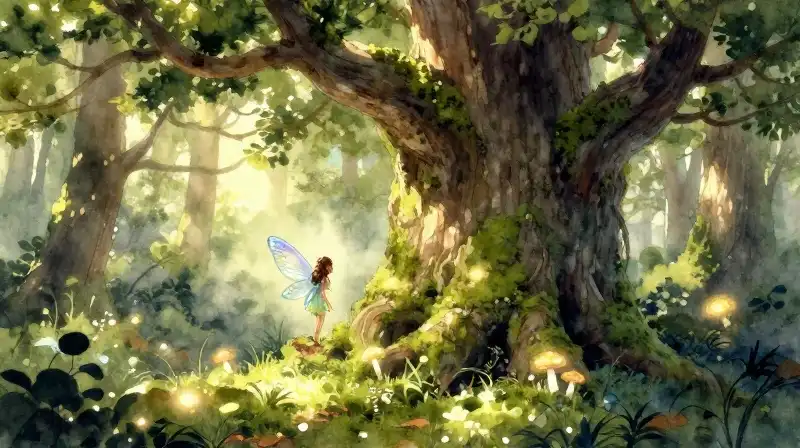
The world is rich with stories of beings too small to be easily seen, creatures that flit between the edges of human perception and the deep roots of regional tradition. From the ethereal whims of the Fay to the sturdy, subterranean charm of the Gnome, the concept of the “tiny mythical creature” has long captured the human imagination. These beings are not merely whimsical concepts; they are localized cultural expressions—living traditions that reflect a community’s relationship with nature, the wild, and the unexplained. To explore these figures is to understand the unique narrative threads of specific local lore, where the boundary between a biological fact and a cherished myth is wonderfully blurred.
While some might see these creatures as quaint relics, they represent a vibrant body of folklore. According to 1, the global tradition of these small legendary figures—which include beings like the Brownies, Leprechauns, and Red Cap Gnomes—suggest a widespread human fascination with the magical lives of the very small.
The Spectrum of Small Myth: Regional Traditions and Hybrids
The concept of a small, powerful, or mysterious forest dweller is not a monolithic tradition; it varies widely depending on the geography and the specific historical moment of its creation. In parts of Europe, for instance, the traditional creatures take on distinct, often highly specific characteristics. One striking example is the Wolpertinger, a creature deeply rooted in Bavarian folklore. As 1 describes, this creature is a hybrid assemblage, often imagined as a fusion of various animals like a hare, a boar, a roebuck, and a raven. These mythical beasts were traditionally associated with the lush forests of Bavaria, serving as a reflection of the wild, complex environment they were said to inhabit.
However, the tradition of mythical small creatures is also a powerful engine for creative invention. The concept has served as a thematic inspiration for modern creative projects, including the design of intricate art guidebooks dedicated to these legends 1. While the Wolpertinger serves as a unique example of a cultural hybrid, the general public engagement with “tiny mythical creatures” across cultures confirms a global interest in these kinds of legendary beings 1.
Debating the Origins: Folklore, Hoaxes, and Misinterpretation
Understanding the roots of these creatures requires a nuanced look at the debate surrounding their creation. Many of these legends—like the Wolpertinger—face scholarly discussion regarding their origin. Some sources suggest they might have arisen not from ancient oral tradition, but perhaps as a later hoax, possibly created by taxidermists 1. This possibility highlights a fascinating intersection of artistry and belief.
Furthermore, the origin of certain mythical entities remains an area of uncertainty. 1 suggests that for some creatures, the debate hinges on whether they are purely folklore or perhaps represent misidentified animals. Modern zoologists have even noted that vague verbal descriptions passed down through generations can lead people to assign mythical names to real animals—such as bats—because the visual imagery remains elusive or difficult for people to clearly define 1. This observation suggests that folklore can sometimes act as a cultural placeholder for natural phenomena that defy easy categorization.
Living Traditions: From Fictional Beings to Cultural Touchstones
The perception and documentation of certain small mythical creatures show how they live in the collective cultural consciousness. For instance, the perception of beings like gnomes and fairies is well-documented in various published resources, such as *The World Guide to Gnomes, Fairies and other little people* 1. These descriptions solidify their place in the modern tapestry of mythology.
In regional folklore, other specialized creatures exist that anchor specific local stories. The Kobalos, for example, is one such entity, whose unique regional details are preserved in specific cultural writings 1. Whether a creature is known as a Kobalos or a Brownie, its importance lies in how it defines the local relationship with the world. These traditions, ranging from the magical expectations of gnomes to the subtle regional folklore of figures like the Leprechaun, provide rich data on human storytelling and cultural identity 1.
Addressing the Common Questions
The exploration of these legends often brings up questions about their sheer variety and how they fit into the broader realm of myth. The vast catalog of tiny mythical creatures often leads to searches for lists and pictures, indicating a strong public interest in documenting the “tiny mythical creatures list with pictures” (Related searches). However, the true value of these traditions lies not in a mere cataloguing of names, but in understanding the cultural narrative they embody. The search for “Small fantastical creatures word salad” often reflects the difficulty of putting such vibrant, localized, and sometimes conflicting narratives into one neat definition.
The presence of similar creature concepts across different cultures—from the Red Cap Gnomes to the Brownies—demonstrates a shared human tendency to conceptualize the hidden lives within the natural world, even if the specific names and traits differ dramatically 1.
Synthesis: The Enduring Power of the Small
The enduring appeal of tiny mythical creatures is, at its heart, a reflection of the human desire to acknowledge the complexity and mystery of the world around us. These figures exist at the intersection of verifiable cultural practice and beautiful uncertainty. Whether they are seen as a result of historical hoaxes, imaginative storytelling, or misidentified creatures, their integration into folklore provides a meaningful framework for communities to understand their local environment and celebrate their unique heritage. They remind us that the most powerful narratives are often those that exist just out of sight, breathing within the traditions of human shared memory.
References
Footnotes
Related Articles