Slavic Folklore: Who Are the Terrifying Monsters and Villains?

Introduction
The world of Slavic folklore is not merely a collection of quaint mythical beasts; it is a living, complex tapestry woven from ancient anxieties, regional fears, and the profound relationship between human communities and the overwhelming power of nature. These stories—the narratives of monsters, spirits, and powerful figures—serve as cultural mirrors, reflecting the challenges of survival, the morality of the harvest, and the boundaries between the known world and the chaotic, unseen wild. For those wishing to understand the heart of Slavic traditions, the monsters are not simply villains; they are crucial cultural touchstones that define morality, regional identity, and the limits of human control.
The Demonic Forces and the Alluring Wild
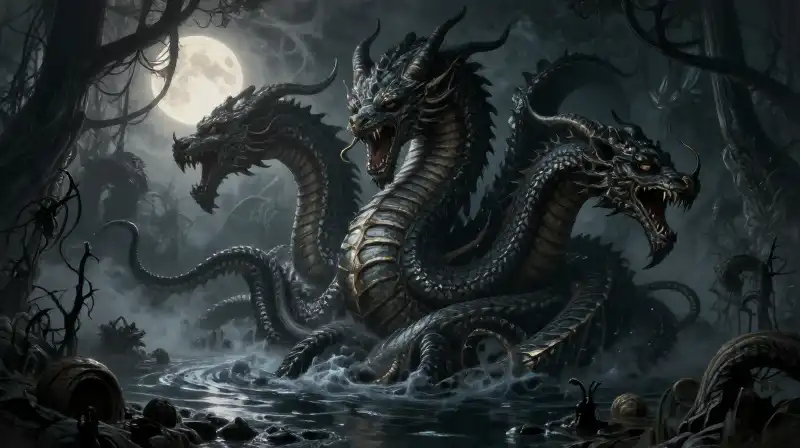
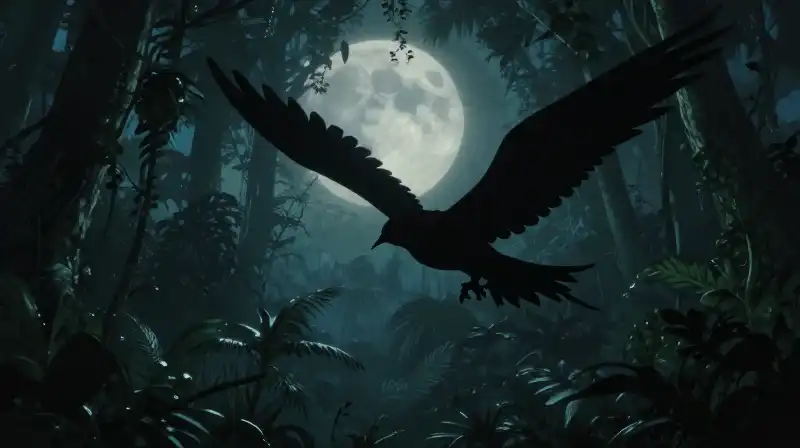
In the broader Slavic imagination, the most terrifying entities often embody the forces of pure chaos and malevolence. These figures are frequently adopted or adapted through cultural exchange, providing concrete images for abstract moral concepts. The Azhdaya, a monstrous, hundred-year-old variant of the Zmaj (dragon), serves as a prime example. Described with an odd number of heads, the Azhdaya is renowned for its fire-spitting and destructive capacity. Its attributes—greedy, hostile, and constantly ravenous—allowed Christianity to adopt it as a potent visual symbol of the devil within the Slavic pantheon 1. However, Slavic folklore also explores danger through seduction and psychological disruption, rather than just raw power. Figures like the Alkonost, a bird-woman who sings in the underworld, represent the allure of the dangerous unknown. She stands in contrast to Sirin, who might appear in a vibrant orchard only to wail during ceremonies like the Apple Feast of the Savior Day 1. These creatures showcase how threat in the tradition can manifest as a fatal combination of beauty and doom. Furthermore, the undead archetypes, such as the Upior and the Vurdalack, function as supernatural antagonists, sometimes drawing comparisons to the Jiangshi of Chinese lore 1.
The Ecosystem of Domestic Fear: Spirits and Households
Perhaps the most nuanced aspect of Slavic mythology is the coexistence of benevolent and profoundly malignant spirits within the boundaries of daily life. This is not a world of monolithic evil, but one where the presence of an entity could shift from a protective guardian to a devastating curse depending on the environment. On one hand, domestic life is protected by benevolent spirits. The Domovoy and Bannik (the master of the bathhouse) are regarded as protective spirits who oversee the home 1. They represent the comfort and stable order of human community. In sharp contrast, the Kikimora represents the chaos and neglect of the modern household. She is a malicious house spirit often associated with unkempt or disordered homes (1, 2), serving as a folk reminder that domestic harmony requires proper upkeep. Other threats focus on individual fate. The Leekho Odnoglazoe, a one-eyed humanoid creature, is specifically tied to the concept of misfortune. According to 2, this figure gains power and size in direct proportion to the illness or death it causes, suggesting a deeply ingrained cultural belief in the visible manifestation of misfortune.
Regional Variants: Faces of Malevolence
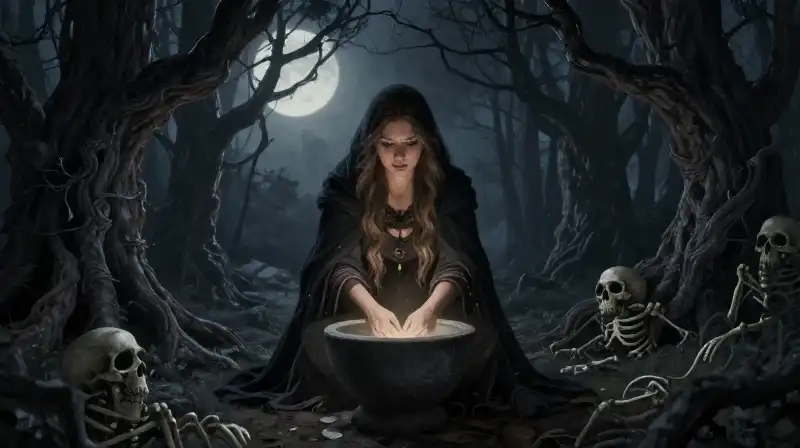
The power and characteristics of monsters often shift dramatically depending on the geographic region of the Slavic world. While some figures hold universal sway, others are intensely localized, telling the specific stories of their communities. In the Eastern Slavic traditions, Baba Yaga is a primary archetype—a powerful, typically malevolent witch living in a notorious hut with chicken legs 1. Although she is primarily viewed as a threat, certain tales occasionally present her as a dispenser of profound wisdom. In contrast, Southern Slav beliefs introduce Baba Roga, a figure distinct from Yaga. Baba Roga is characterized as a horned, ugly, hunchbacked old woman whose specific malice is the active abduction of naughty children from dark caves 1. Other region-specific monsters serve as avatars for societal fears. Bauk, from Southern Slavic beliefs, is portrayed as a creature that preys upon humans in dark and secluded places 1. In a different cultural sphere, Beda is a bony demon closely associated with the devastating realities of plague and “misery,” linking mythological horror directly to historical and epidemiological anxieties 1.
Monsters in Narrative and the Wild
Slavic lore successfully integrates monstrous figures into the grand scale of epic narratives, demonstrating that these beings are not just bogeymen, but vital narrative tools. Balachko, a three-headed giant originating in Serbian tales, exemplifies this integration; he is a formidable opponent who can be felled by the epic hero, Miloš Vojinović, in the poem “Tsar Dušan’s wedding” 1. The wild spirits, however, often embody the untamed power of nature itself. Figures such as the Rusalka and Bolotnitsa are intrinsically tied to water and swamps, embodying the unpredictable and often treacherous nature of wetland environments. The Polevik, a sexually preoccupied field spirit, offers a fascinating duality: he may aid conscientious workers, but his nature is dangerous, especially at night 1. Even animal spirits serve as terrifying threats. Kot Bayun, a gigantic cat, is an example of a monster whose primary weapon is not aggression but hypnotic sleep, capturing victims with its singing and powerful allure 1. This diversity of threats—ranging from the gigantic Balachko to the seductive Kot Bayun—highlights the vast spectrum of fears found in Slavic traditions.
Cultural Synthesis: What These Stories Tell Us
The enduring relevance of Slavic mythological creatures lies not in their ability to frighten, but in their function as cultural anchors. By defining these villains—whether they are the destructive greed of the Azhdaya, the personal misfortune of the Leekho Odnoglazoe, or the territorial malice of the Kikimora—these traditions help define the parameters of human behavior and moral boundaries. They represent the negotiation between man and the elements, between order and chaos, and between the safe confines of the hearth and the unknowable wilderness. Understanding these figures is to understand the complex relationship a community has with its history, its environment, and its deepest collective anxieties.
References
Footnotes
Frequently Asked Questions
Who are the villains in Slavic folklore?
Villains in Slavic folklore encompass a wide spectrum, ranging from destructive monsters like the fire-spitting Azhdaya and seductive entities like the Alkonost to undead antagonists such as the Upior. These figures also include domestic spirits, such as the malicious Kikimora, and regional archetypes like the malevolent Baba Yaga.
Who are the evil spirits in Slavic mythology?
Evil figures in Slavic mythology include the malicious Kikimora, the one-eyed Leekho Odnoglazoe, and the malevolent Baba Yaga, alongside the destructive Azhdaya and the undead archetypes Upior and Vurdalack. Other threatening entities are the wild spirits Rusalka and Bolotnitsa, who are tied to the unpredictable nature of water and swamps.
Related Articles