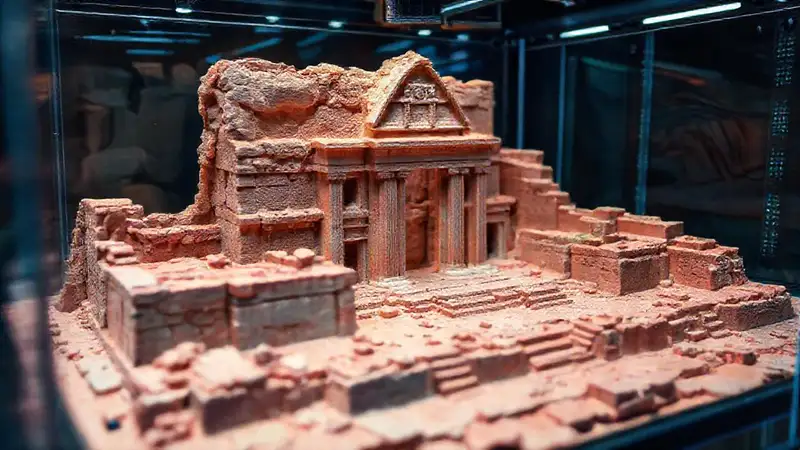



The Cultura archaeological culture, flourishing in the Iberian Peninsula between approximately 3200 and 2300 BC, left behind a legacy of impressive stone structures – megalithic monuments, burial mounds (tumuli), and complex ritual landscapes. Traditionally, documenting these often-dispersed and sometimes remote sites has relied on extensive ground surveys, a labor-intensive and time-consuming process. However, advances in remote sensing technology, particularly the increasing availability and resolution of satellite imagery, offer a revolutionary approach to Cultura site discovery, mapping, and analysis, enabling archaeologists to understand these landscapes in unprecedented detail.
The potential of satellite imagery to transform archaeological practice is substantial. By leveraging freely available data alongside more specialized and high-resolution commercial imagery, researchers can identify subtle topographic variations, vegetation patterns, and soil anomalies indicative of buried structures. This shift allows for a more efficient and comprehensive assessment of large areas, potentially uncovering previously unknown sites and integrating existing knowledge into a holistic understanding of the Cultura’s settlement and ceremonial practices, all while minimizing disturbance to these fragile environments.
## Site Discovery and Inventory
Satellite imagery, especially when combined with digital elevation models (DEMs), provides a powerful tool for identifying potential archaeological sites. Subtle changes in elevation, often invisible to the naked eye on the ground, can reveal the tell-tale signs of buried mounds or platform structures. LIDAR (Light Detection and Ranging) data, increasingly available, penetrates vegetation cover, allowing archaeologists to “see” the ground surface below the forest canopy, dramatically increasing the chances of locating hidden monuments.
Furthermore, spectral analysis of satellite images can highlight areas with altered soil composition or vegetation stress, potentially indicating past human activity. Analyzing vegetation indices, like the Normalized Difference Vegetation Index (NDVI), can reveal differences between areas that have been disturbed by archaeological remains and those that have remained untouched. This is particularly useful in regions with dense vegetation where traditional survey methods are limited, expanding the scope of potential exploration.
The advantages extend beyond simple detection. Satellite imagery facilitates rapid inventory and mapping of existing sites, providing a spatial context that traditional methods struggle to achieve. Researchers can now create comprehensive inventories of Cultura monuments across vast regions, linking them geographically and forming a more complete picture of their distribution and relationships to the surrounding landscape.
## Mapping Monumental Architecture
Traditional ground-based mapping techniques are time-consuming and often challenging, particularly for large and complex sites. Satellite imagery, especially high-resolution imagery and aerial photography derived from satellites, allows for the creation of precise and detailed maps of Cultura monumental architecture without the need for intrusive fieldwork. The ability to capture these structures in their entirety, from a bird’s-eye view, provides a unique perspective, revealing patterns and relationships that might be missed during ground-level observation.
Furthermore, photogrammetry, a technique where 3D models are generated from overlapping photographs, can be applied to satellite imagery to create detailed digital elevation models (DEMs) of these sites. These DEMs can then be analyzed to identify subtle topographic features, such as terraces, walls, and ditches, providing valuable insights into the construction techniques and overall design of the monuments. This level of detail enhances our understanding of the architectural skill of the Cultura people.
The resulting maps and 3D models are invaluable resources for archaeological research and heritage management. They provide a permanent record of the sites, which can be used for monitoring changes over time, planning conservation efforts, and developing virtual reconstructions for public outreach. The creation of a digital archive is a crucial aspect of preserving these cultural resources.
## Analyzing Settlement Patterns

Beyond the monumental architecture, understanding the wider settlement patterns of the Cultura is critical to understanding their society. Satellite imagery and related geospatial technologies can reveal insights into the distribution of settlements, agricultural practices, and other human activities that shaped the landscape. Analyzing patterns of land use, such as field systems and irrigation channels, provides clues about the economy and social organization of the Cultura people. This analysis goes far beyond what a foot survey could achieve in the same timeframe.
Spectral indices, like Enhanced Vegetation Index (EVI), can be used to identify areas of past agricultural activity, even where the evidence is subtle. By comparing historical imagery with modern imagery, researchers can track changes in land use over time and reconstruct the agricultural landscape of the Cultura. Integrating these data with soil maps and geological information can provide a richer understanding of the environmental factors that influenced settlement choices.
The ability to analyze settlement patterns on a regional scale allows archaeologists to test hypotheses about the relationship between population density, resource availability, and social complexity. Identifying clusters of settlements, understanding their relationship to waterways, and mapping their spatial distribution contributes to a holistic model of the Cultura’s organization.
## Monitoring Site Degradation and Change
Archaeological sites are vulnerable to a variety of threats, including erosion, vegetation growth, agricultural expansion, and looting. Satellite imagery provides a powerful tool for monitoring these threats and assessing the condition of Cultura sites over time. Time-series imagery, spanning decades or even centuries, allows researchers to track changes in vegetation cover, soil erosion, and the encroachment of agricultural land, highlighting areas of potential degradation.
Change detection techniques can be applied to satellite imagery to automatically identify areas where significant changes have occurred. This allows for early detection of potential threats, enabling archaeologists to implement preventative measures, such as erosion control or fencing, before irreversible damage occurs. The continuous monitoring capabilities of satellites provide a proactive approach to heritage conservation.
Furthermore, satellite imagery can be used to assess the impact of human activities on archaeological sites, such as the construction of roads or pipelines. This information is crucial for informing environmental impact assessments and ensuring that development projects are carried out in a sustainable manner, minimizing disturbance to these fragile cultural landscapes.
## Conclusion
The application of satellite imagery to the study of Cultura archaeological sites represents a significant leap forward in archaeological practice. It offers unprecedented opportunities for site discovery, mapping, analysis, and monitoring, enabling researchers to explore these landscapes with greater efficiency, accuracy, and comprehensiveness than ever before. The integration of this technology with traditional archaeological methods promises to revolutionize our understanding of the Cultura culture and its place in the prehistoric Iberian Peninsula.
Looking ahead, further advancements in satellite technology, such as increased spatial resolution and spectral capabilities, will continue to enhance the value of this approach. Combining satellite imagery with other remote sensing techniques, such as drone-based imagery and geophysical surveys, will provide an even more complete picture of the Cultura landscape. This burgeoning field of ‘remote archaeology’ truly holds the key to unlocking the secrets of these ancient communities.
Related Articles